
Utilization
-
ER spending among the commercially insured continued to rise in 2016, driven by the price and use of high severity cases (2009-2016)
Tags: Commercially Insured, Emergency Room, Geographic Variation, Outpatient Spending, Prices, Utilization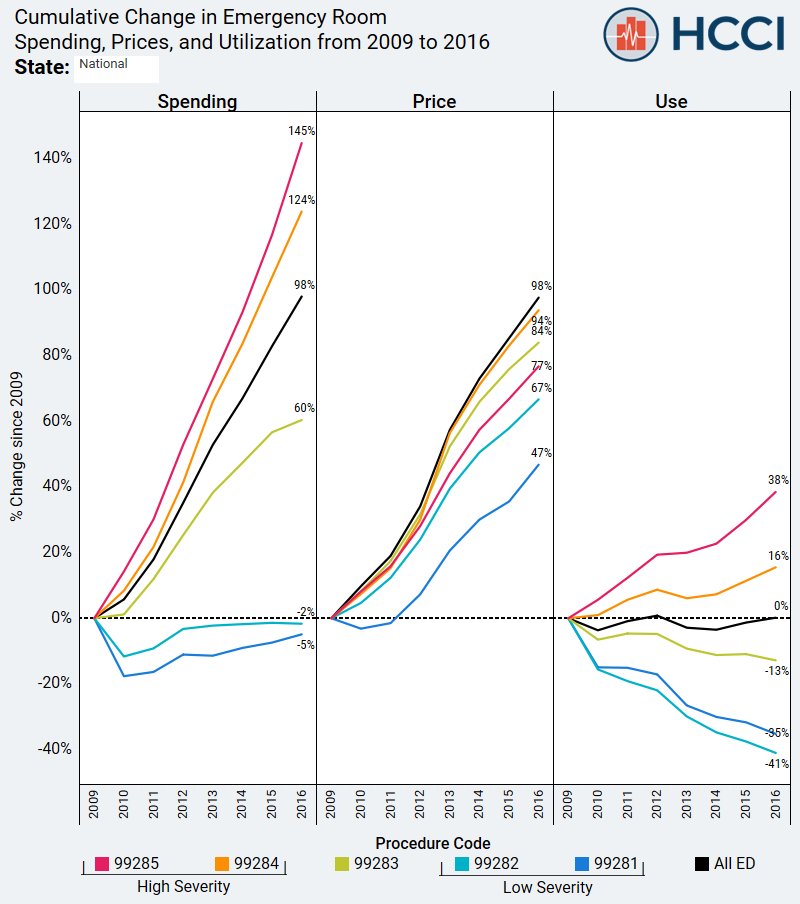 Read more: ER spending among the commercially insured continued to rise in 2016, driven by the price and use of high severity cases (2009-2016)
HCCI recently expanded its reporting on emergency room (ER) spending trends to include the most recent data available (2016). We characterize trends in spending, price, and utilization for the five Current Procedural Terminology (CPT) codes designed to capture the level of severity and complexity of every ER visit. While average prices for all five ER…
-
Health Services Research: Physical Therapy as the First Point of Care to Treat Low Back Pain: An Instrumental Variables Approach to Estimate Impact on Opioid Prescription, Health Care Utilization, and Costs
Tags: Commercially Insured, Emergency Room, HSR, Opioids, Out-of-Pocket, Peer Reviewed Journals, Utilization Read more: Health Services Research: Physical Therapy as the First Point of Care to Treat Low Back Pain: An Instrumental Variables Approach to Estimate Impact on Opioid Prescription, Health Care Utilization, and Costs
ABSTRACT Objective: To compare differences in opioid prescription, health care utilization, and costs among patients with low back pain (LBP) who saw a physical therapist (PT) at the first point of care, at any time during the episode or not at all. Data Sources: Commercial health insurance claims data, 2009–2013. Study Design: Retrospective analyses using…
-
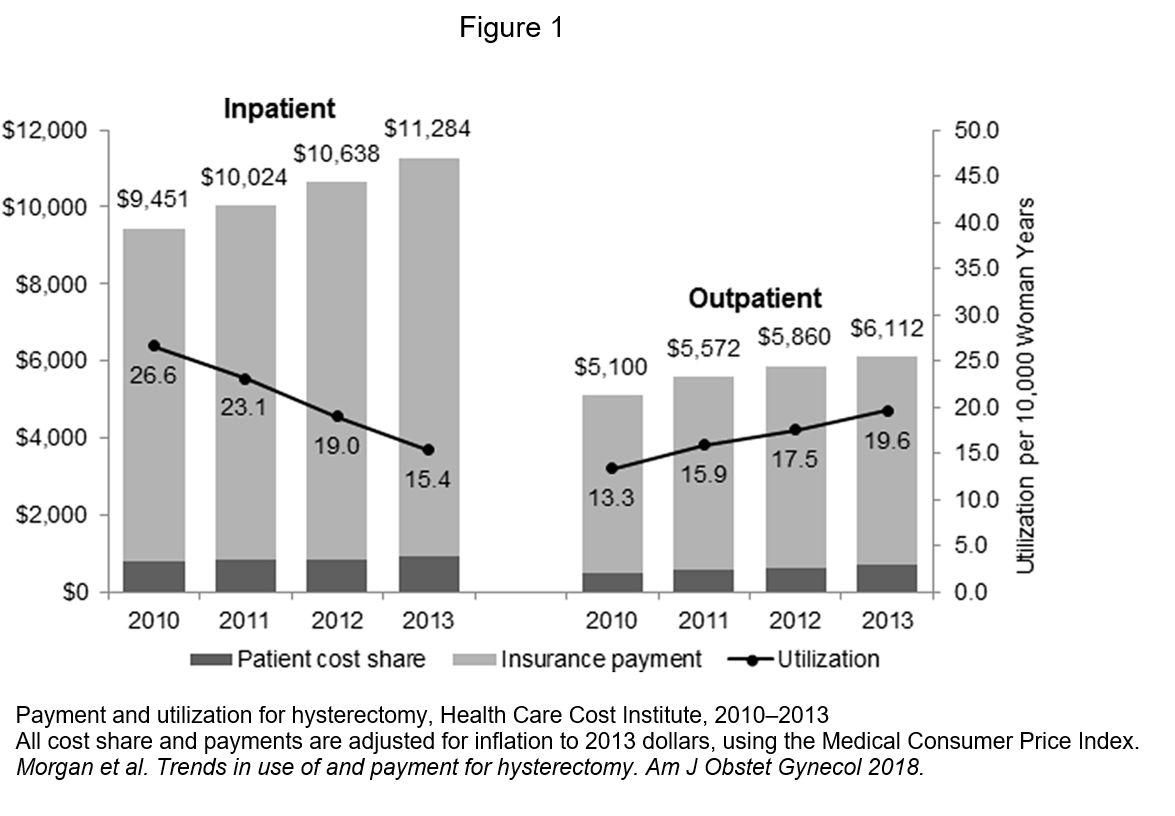
American Journal of Obstetrics & Gynecology: Nationwide trends in the utilization of and payments for hysterectomy in the United States among commercially insured women
 Read more: American Journal of Obstetrics & Gynecology: Nationwide trends in the utilization of and payments for hysterectomy in the United States among commercially insured women
ABSTRACT Background: Laparotomy followed by inpatient hospitalization has traditionally been the most common surgical care for hysterectomy. The financial implications of the increased use of laparoscopy and outpatient hysterectomy are unknown. Objectives: The objective of the study was to quantify the increasing use of laparoscopy and outpatient hysterectomy and to describe the financial implications among…
-
Obstetrics & Gynecology: Rate of Pelvic Organ Prolapse Surgery Among Privately Insured Women in the United States, 2010-2013
Read more: Obstetrics & Gynecology: Rate of Pelvic Organ Prolapse Surgery Among Privately Insured Women in the United States, 2010-2013Abstract OBJECTIVE: To analyze utilization of, and payments for, pelvic organ prolapse procedures after the 2011 U.S. Food and Drug Administration (FDA) communication regarding transvaginal mesh. METHODS: This is a retrospective cohort study examining private claims from three insurance providers for inpatient and outpatient prolapse procedures from 2010 to 2013 in the Health Care Cost…
-
Health Affairs: Health Spending Growth Is Accelerating; Prices Are In The Driver’s Seat
Read more: Health Affairs: Health Spending Growth Is Accelerating; Prices Are In The Driver’s SeatHEALTH AFFAIRS BLOG: “Perhaps nothing illustrates the intractability of America’s struggle with health spending more than the recent announcement by Amazon, JP Morgan, and Berkshire Hathaway that they were founding a new entity to address health care costs for their employees. Despite lacking any concrete details this announcement managed to wipe billions of dollars in…
-
News Wise: Plotting the Downward Trend in Traditional Hysterectomy
Read more: News Wise: Plotting the Downward Trend in Traditional HysterectomyFewer women are getting hysterectomies in every state across the country. Instead, more patients may be choosing minimally invasive procedures or other alternatives to handle issues like pelvic pain and fibroids over a traditional abdominal hysterectomy, new Michigan Medicine research suggests. The rate of hysterectomies in the U.S. decreased 12 percent between 2010 and 2013, from…
-
Washington Post: Working Americans are using less health care, but spending more
Read more: Washington Post: Working Americans are using less health care, but spending moreBy: Carolyn Johnson Americans who get health insurance through their jobs are not using more medical care than they were five years ago, but they are spending more due to soaring medical prices, according to a new report. Health spending for the more than 150 million people who receive insurance through their employers was $5,407…
-
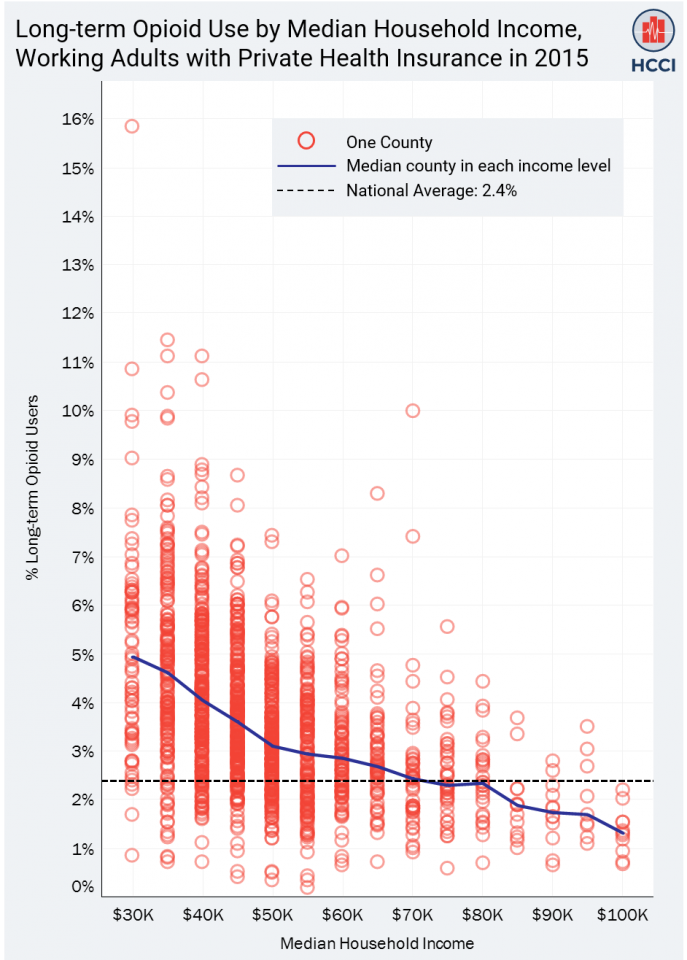
Workers in low income counties more likely to be long-term opioid users
 Read more: Workers in low income counties more likely to be long-term opioid users
Past literature has found links between higher opioid use and local economic conditions for people enrolled in public health programs, but there has been little discussion of whether this relationship occurs among the privately insured. Using HCCI claims data and county level income data from the US Census Bureau, we examined how a county’s median…
-
Medicare Advantage Health Care Utilization – Observation Stays
Read more: Medicare Advantage Health Care Utilization – Observation StaysThis data brief reports on outpatient observations stays in the Medicare Advantage population from 2010 through 2014. The results show that the rate of observations stays increased in total as well as following hospitalizations.
-
2015 Health Care Cost and Utilization Report
Tags: Commercially Insured, Drug Spending, HCCUR, Inpatient Spending, Outpatient Spending, Physician Spending, Utilization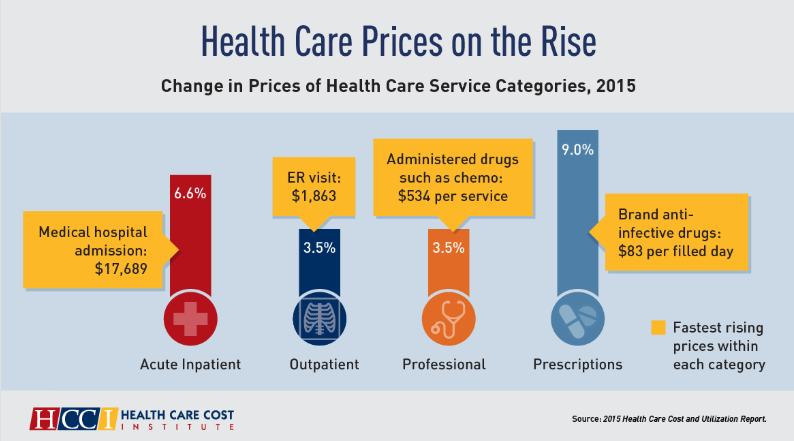 Read more: 2015 Health Care Cost and Utilization Report
The 2015 Health Care Cost and Utilization Report shows that spending per privately insured averaged $5,141 in 2015, up $226 from the year before. Key Findings Health care spending averaged $5,141 per individual in 2015, up $226 from the year before. Out-of-pocket spending rose 3.0 percent in 2015, to an average of $813 per capita….