
Opioids
-
Annals of Surgery: Opioid Fills in Children Undergoing Surgery From 2011 to 2014: A Retrospective Analysis of Relationships Among Age, Initial Days Supplied, and Refills
 Read more: Annals of Surgery: Opioid Fills in Children Undergoing Surgery From 2011 to 2014: A Retrospective Analysis of Relationships Among Age, Initial Days Supplied, and Refills
Abstract Objective: The primary objective is to describe the relationship between the days supplied of postsurgical filled opioid prescriptions and refills. Background: The American College of Surgeons (ACS) has called for surgeons to alter opioid prescribing to counteract the opioid epidemic while simultaneously providing pain relief. However, there is insufficient evidence to inform perioperative prescribing…
-
Health Affairs: Treatment Of Opioid Use Disorder Among Commercially Insured US Adults, 2008–17
Read more: Health Affairs: Treatment Of Opioid Use Disorder Among Commercially Insured US Adults, 2008–17Abstract: There is abundant literature on efforts to reduce opioid prescriptions and misuse, but comparatively little on the treatment provided to people with opioid use disorder (OUD). Using claims data representing 12–15 million nonelderly adults covered through commercial group insurance during the period 2008–17, we explored rates of OUD diagnoses, treatment patterns, and spending. We…
-
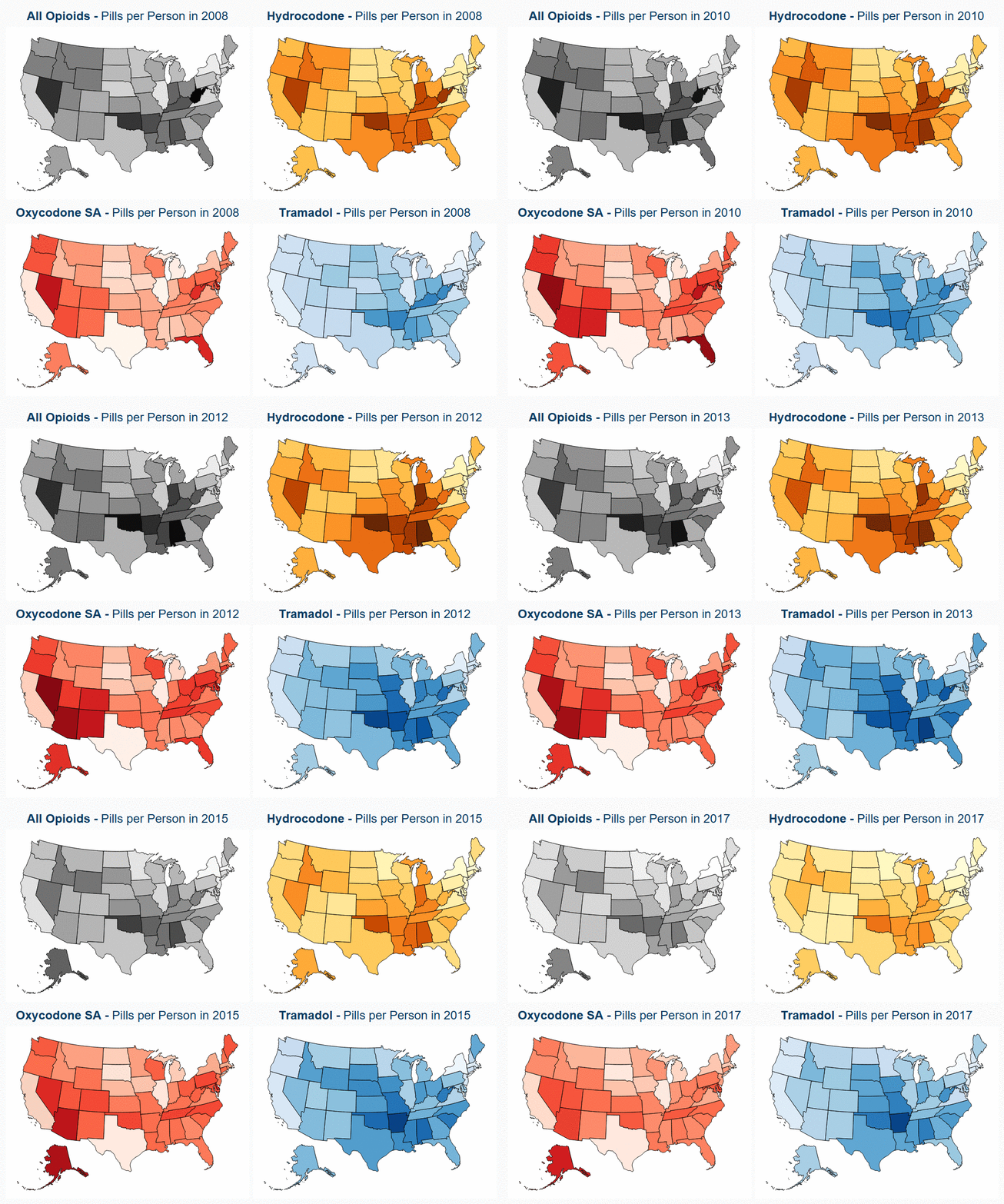
State Variation in Opioid Prescribing over 10 Years
 Read more: State Variation in Opioid Prescribing over 10 Years
Changes in opioid utilization correlated with state-level policy changes aimed at decreasing opioid prescription rates. Previous research by HCCI illustrated that national opioid utilization in pills per person fell 27% between the years of 2008 and 2017, driven by declines in the use of hydrocodone (Vicodin). In addition to giving insight into prescription opioid utilization…
-
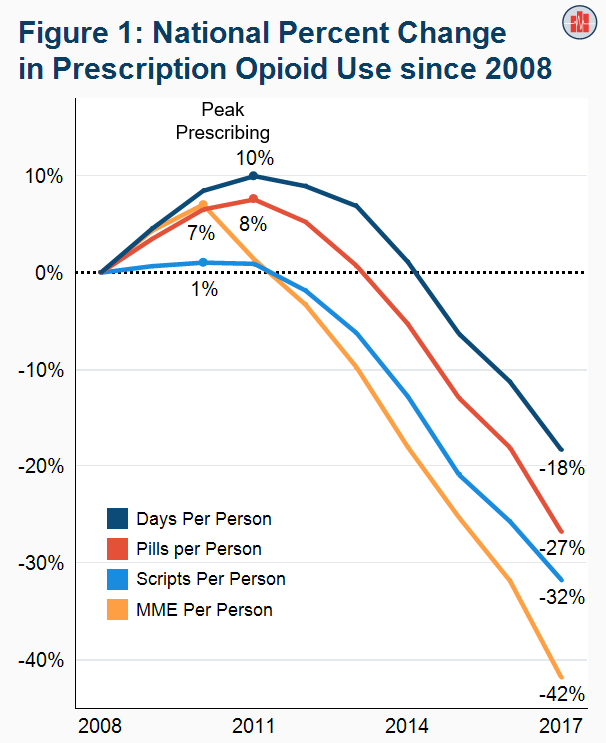
Opioid Prescriptions Declined 32% for the Commercially Insured over 10 Years (2008 to 2017)
 Read more: Opioid Prescriptions Declined 32% for the Commercially Insured over 10 Years (2008 to 2017)
Among people who get health insurance from their employers (56% of the population in 2017), prescription opioid use peaked in 2010/2011 and declined every year from 2012 to 2017. In a new study using the Health Care Cost Institute’s commercial claims data from 2008 to 2017, we observed a decline regardless of how utilization was…
-
Health Affairs: Assessing The Impact Of State Policies For Prescription Drug Monitoring Programs On High-Risk Opioid Prescriptions
Tags: Commercially Insured, Geographic Variation, Health Affairs, Opioids, Peer Reviewed Journals, UtilizationRead more: Health Affairs: Assessing The Impact Of State Policies For Prescription Drug Monitoring Programs On High-Risk Opioid PrescriptionsABSTRACT: Policies and practices have proliferated to optimize prescribers’ use of their states’ prescription drug monitoring programs, which are statewide databases of controlled substances dispensed at retail pharmacies. Our study assessed the effectiveness of three such policies: comprehensive legislative mandates to use the program, laws that allow prescribers to delegate its use to office staff,…
-
Journal of General Internal Medicine: First Opioid Prescription and Subsequent High-Risk Opiod Use, a National Survey of Privately Insured and Medicare Advantage Adults
Read more: Journal of General Internal Medicine: First Opioid Prescription and Subsequent High-Risk Opiod Use, a National Survey of Privately Insured and Medicare Advantage AdultsBACKGROUND: National guidelines make recommendations regarding the initial opioid prescriptions, but most of the supporting evidence is from the initial episode of care, not the first prescription. OBJECTIVE: To examine associations between features of the first opioid prescription and high-risk opioid use in the 18 months following the first prescription. DESIGN: Retrospective cohort study using data from a large commercial insurance…
-
Health Services Research: Physical Therapy as the First Point of Care to Treat Low Back Pain: An Instrumental Variables Approach to Estimate Impact on Opioid Prescription, Health Care Utilization, and Costs
Tags: Commercially Insured, Emergency Room, HSR, Opioids, Out-of-Pocket, Peer Reviewed Journals, UtilizationRead more: Health Services Research: Physical Therapy as the First Point of Care to Treat Low Back Pain: An Instrumental Variables Approach to Estimate Impact on Opioid Prescription, Health Care Utilization, and CostsABSTRACT Objective: To compare differences in opioid prescription, health care utilization, and costs among patients with low back pain (LBP) who saw a physical therapist (PT) at the first point of care, at any time during the episode or not at all. Data Sources: Commercial health insurance claims data, 2009–2013. Study Design: Retrospective analyses using…
-
Doctors Lounge: Socioeconomic Factors Associated With Opioid Prescriptions
Read more: Doctors Lounge: Socioeconomic Factors Associated With Opioid PrescriptionsAmong disabled Medicare beneficiaries, county-level socioeconomic factors are associated with opioid prescriptions, with more prescriptions seen with lower socioeconomic indicators, according to a study published in the January issue of Medical Care. Chao Zhou, Ph.D., from the Health Care Cost Institute in Washington, D.C., and colleagues examined opioid prescriptions of disabled Medicare beneficiaries without record…
-
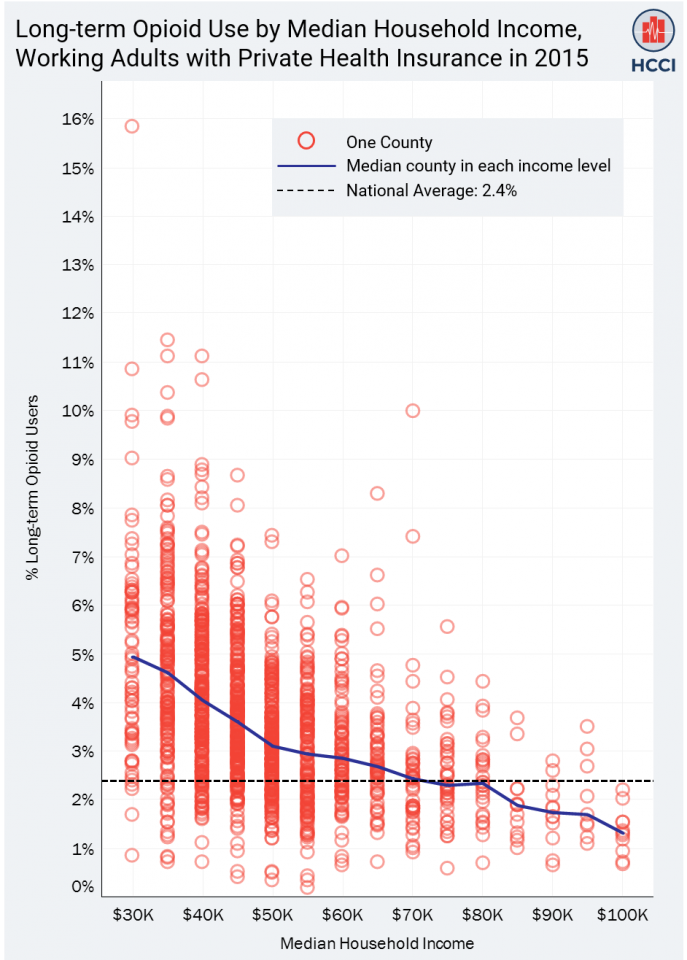
Workers in low income counties more likely to be long-term opioid users
 Read more: Workers in low income counties more likely to be long-term opioid users
Past literature has found links between higher opioid use and local economic conditions for people enrolled in public health programs, but there has been little discussion of whether this relationship occurs among the privately insured. Using HCCI claims data and county level income data from the US Census Bureau, we examined how a county’s median…