
NBER
-
NBER: Do Higher-Priced Hospitals Deliver Higher-Quality Care?
Tags: NBER Read more: NBER: Do Higher-Priced Hospitals Deliver Higher-Quality Care?
Abstract: We analyze whether receiving care from higher-priced hospitals leads to lower mortality. We overcome selection issues by using an instrumental variable approach which exploits that ambulance companies are quasi-randomly assigned to transport patients and have strong preferences for certain hospitals. Being admitted to a hospital with two standard deviations higher prices raises spending by…
-
NBER: The Price Ain’t Right? Hospital Prices and Health Spending on the Privately Insured
Tags: Commercially Insured, Inpatient Spending, Market Concentration, NBER, Outpatient Spending, Peer Reviewed Journals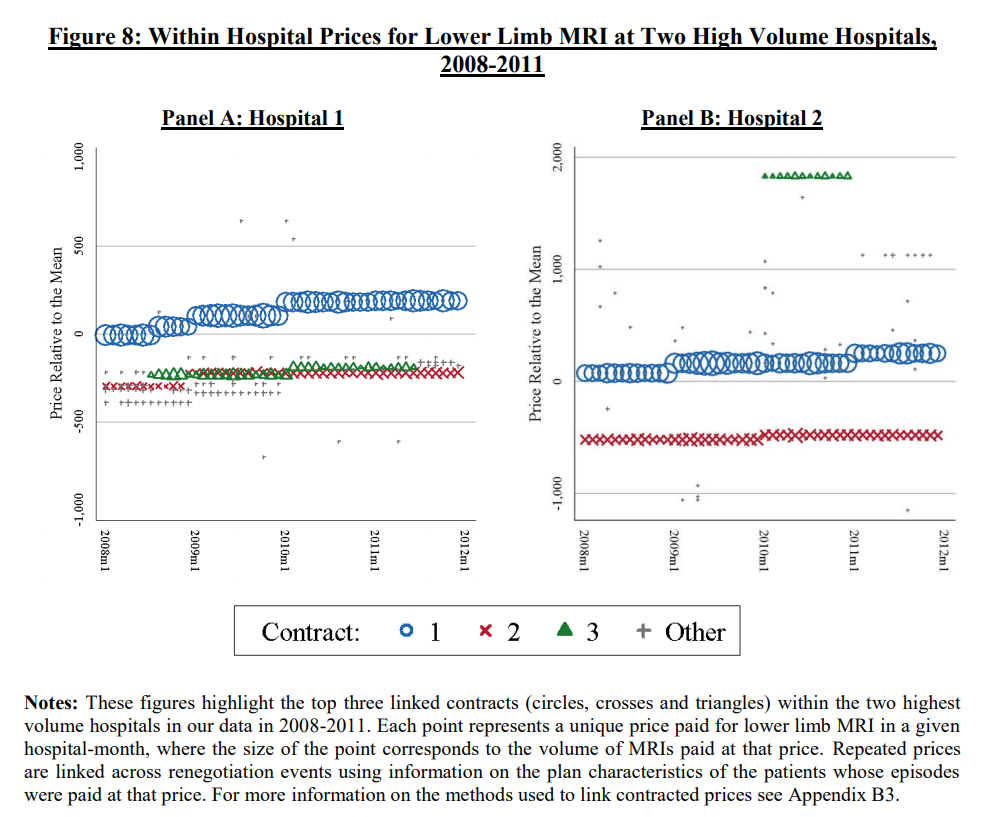 Read more: NBER: The Price Ain’t Right? Hospital Prices and Health Spending on the Privately Insured
ABSTRACT: We use insurance claims data covering 28 percent of individuals with employer-sponsored health insurance in the US to study the variation in health spending on the privately insured, examine the structure of insurer-hospital contracts, and analyze the variation in hospital prices across the nation. Health spending per privately insured beneficiary differs by a factor of…
-
NBER: Hospital Pricing and Public Payments
Tags: Affordable Care Act, Inpatient Spending, NBER, Peer Reviewed Journals, Readmissions, Value Based CareRead more: NBER: Hospital Pricing and Public PaymentsABSTRACT: A longstanding debate in health economics and health policy concerns how hospitals adjust prices with private insurers following reductions in public funding. A common argument is that hospitals engage in some degree of “cost-shifting,” wherein hospitals increase prices with private insurers in response to a reduction in public payments; however, evidence of significant costshifting is…
-
NBER: Does Multispecialty Practice Enhance Physician Market Power?
Read more: NBER: Does Multispecialty Practice Enhance Physician Market Power?ABSTRACT: In markets for health services, vertical integration – common ownership of producers of complementary services – may have both pro- and anti-competitive effects. Despite this, no empirical research has examined the consequences of multispecialty physician practice – a common and increasing form of vertical integration – for physician prices. We use data on 40 million…
-
NBER Working Paper: Healthcare Spending and Utilization in Public and Private Medicare
Tags: Geographic Variation, Medicare, Medicare Advantage, NBER, Peer Reviewed Journals, Value Based Care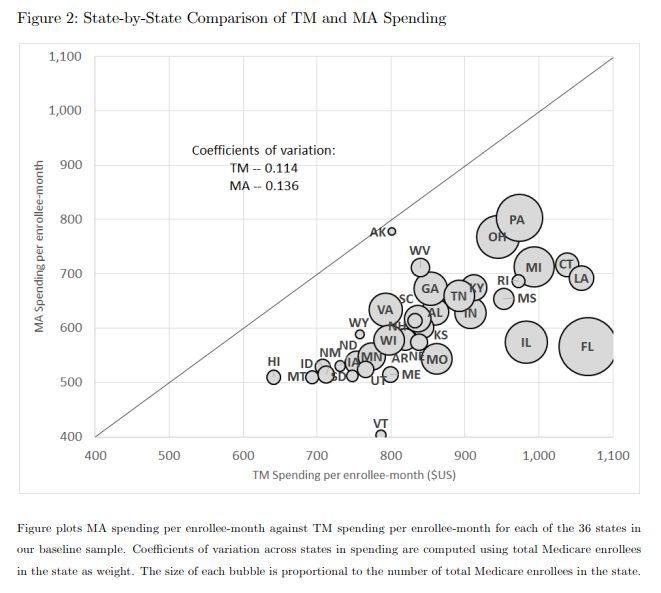 Read more: NBER Working Paper: Healthcare Spending and Utilization in Public and Private Medicare
ABSTRACT: We compare healthcare spending in public and private Medicare using newly available claims data from Medicare Advantage (MA) insurers. MA insurer revenues are 30 percent higher than their healthcare spending. Healthcare spending is 25 percent lower for MA enrollees than for enrollees in traditional Medicare (TM) in the same county with the same risk…
-
NBER: Why Don’t Commercial Health Plans Use Prospective Payment?
Tags: Commercially Insured, Geographic Variation, Inpatient Spending, Market Concentration, NBER, Peer Reviewed JournalsRead more: NBER: Why Don’t Commercial Health Plans Use Prospective Payment?ABSTRACT One of the key terms in contracts between hospitals and insurers is how the parties apportion the financial risk of treating unexpectedly costly patients. “Prospective” payment contracts give hospitals a lump-sum amount, depending on the medical condition of the patient, with limited adjustment for the level of services provided. We use data from the…