Drug Spending
-
International Comparisons of Health Care Prices from the 2024 iFHP Study
Tags: Drug Spending, HCCUR, Inpatient Spending, Out-of-Pocket, Outpatient Spending, Physician Spending, Prices, Utilization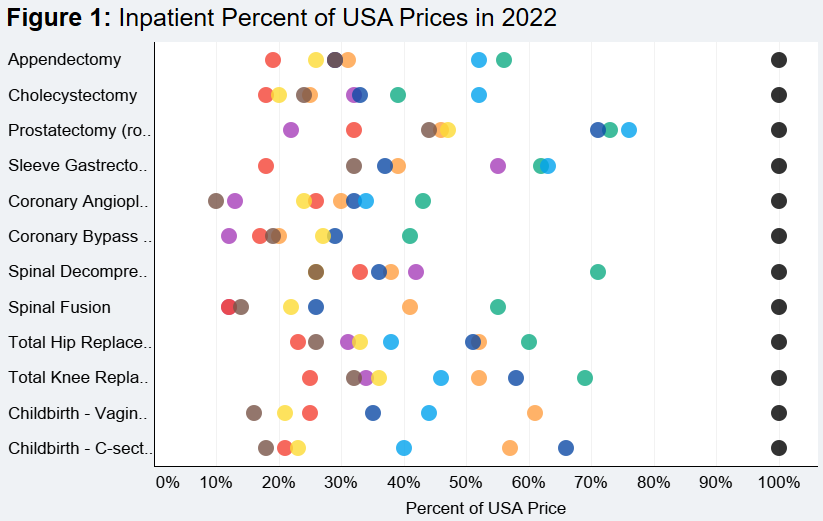 Read more: International Comparisons of Health Care Prices from the 2024 iFHP Study
The International Federation of Health Plans (iFHP) has published its 2024 International Healthcare Cost Comparison Report, marking its latest biennial analysis of global healthcare costs. Compiled in collaboration with the Health Care Cost Institute (HCCI), the report compares costs for inpatient and outpatient treatments, as well as prescription drugs, across nine countries using data from…
-
The Share of Ozempic Users with Diabetes has Decreased Over Time, Indicating Increased Off-label Use
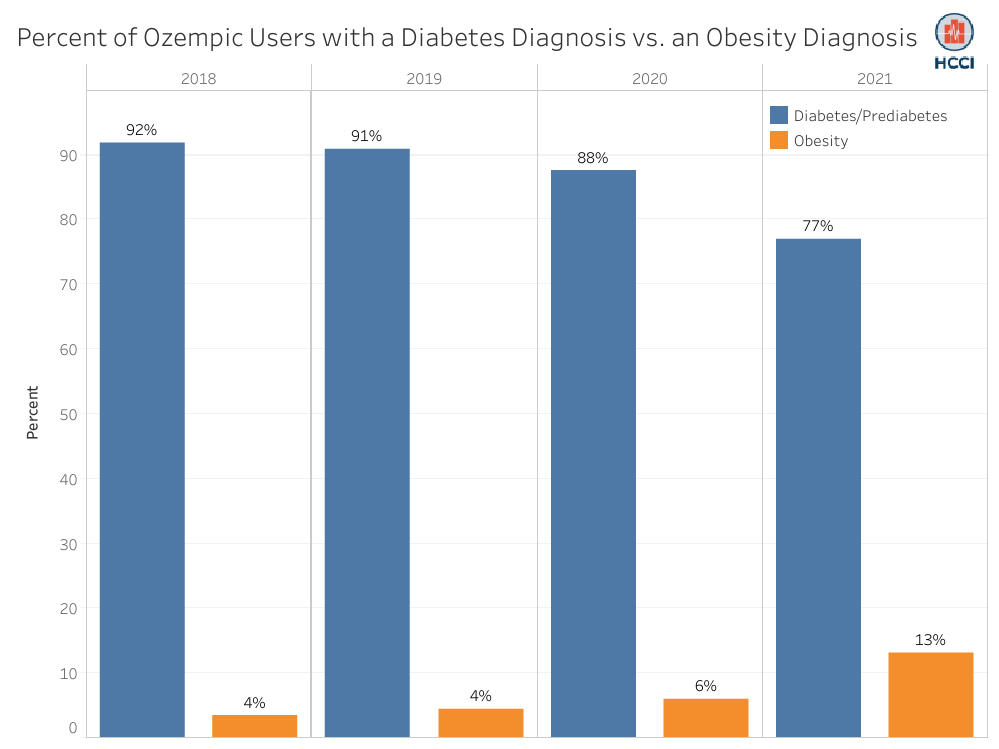 Read more: The Share of Ozempic Users with Diabetes has Decreased Over Time, Indicating Increased Off-label Use
Ozempic, a relatively new anti-diabetes drug, has been in the headlines because of widespread shortages that are making it difficult for patients who use the drug to manage diabetes to access it. Some news articles suggest that off-label use for weight loss has been a factor associated with increased demand. The active ingredient in Ozempic is…
-
Use of and Spending on Top Prescription Drugs in Employer Sponsored Insurance, 2021
 Read more: Use of and Spending on Top Prescription Drugs in Employer Sponsored Insurance, 2021
Recent policy and other initiatives aim to reduce spending on prescription drugs. At the federal level, the Inflation Reduction Act targets reductions in drug spending in Medicare through price negotiation, capping out-of-pocket spending by patients, and requiring drug manufacturers to pay rebates when prices rise faster than inflation. At the state level, there are initiatives…
-
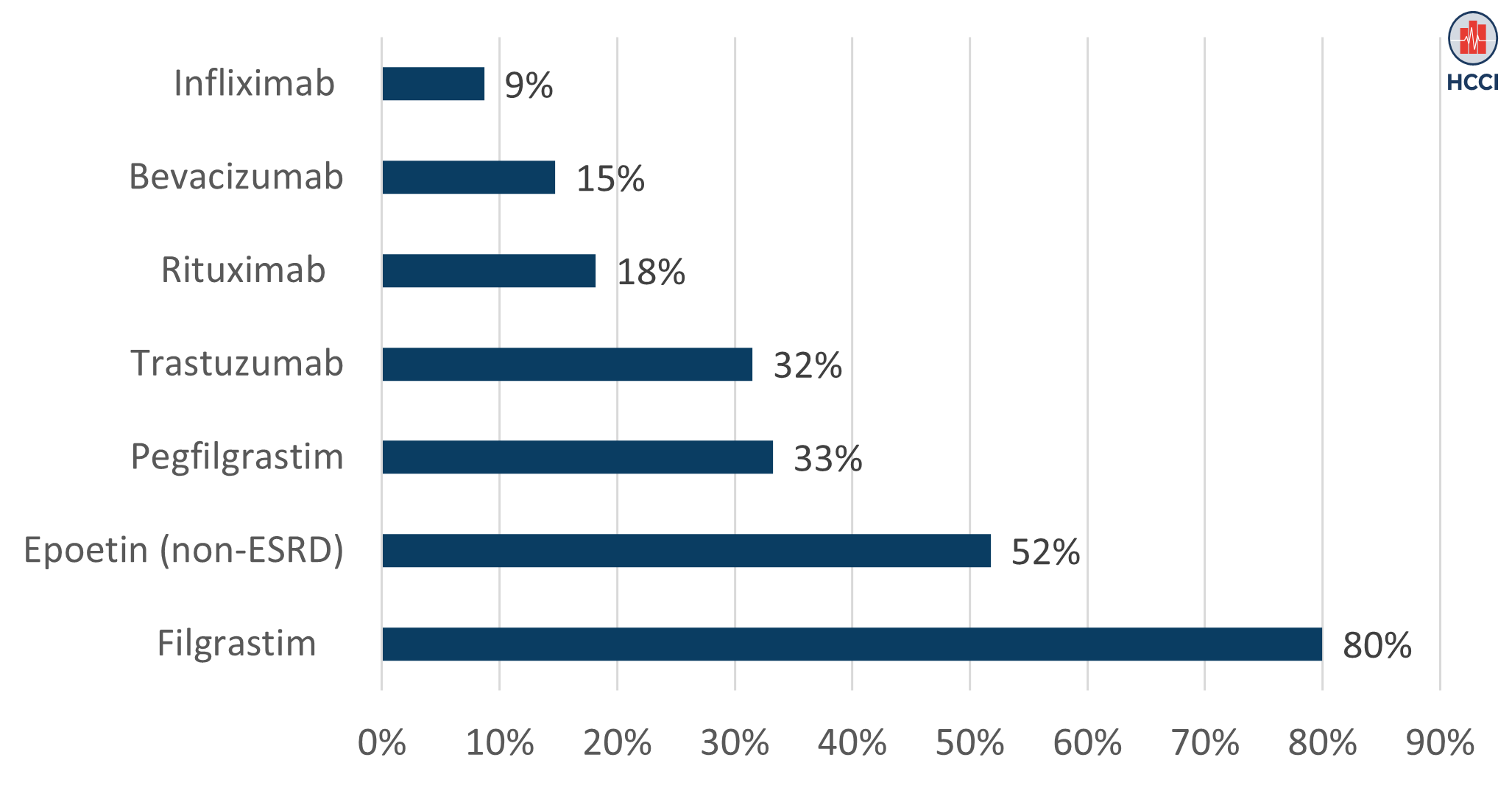
Uptake of Biosimilars Remains Low Among People with Employer-Sponsored Insurance
 Read more: Uptake of Biosimilars Remains Low Among People with Employer-Sponsored Insurance
Biologic drugs represent advances in medical research and treatment but are a major driver of drug spending in the United States. Spending on biologics increased by 50% between 2014 and 2018 in the U.S. even though just 2% of Americans used them. Biosimilars, clinically equivalent, lower-cost versions of original biologic drugs, analogous to generic versions…
-
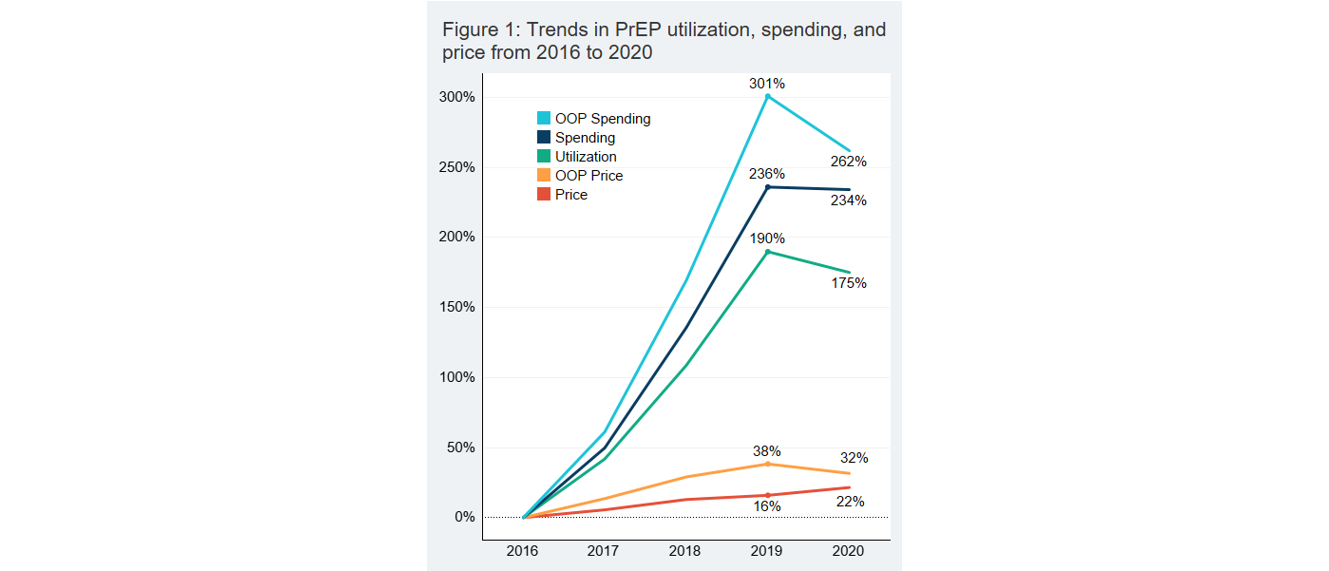
Trends in HIV PrEP utilization, spending, and price
 Read more: Trends in HIV PrEP utilization, spending, and price
Pre-exposure prophylaxis (PrEP) for HIV are medications that reduce an individual’s chances of contracting HIV. The CDC estimates that 1.2 million people are at risk of HIV infection and may benefit from a PrEP prescription. We analyzed health insurance claims for 55 million Americans with employer-sponsored insurance in order to examine utilization and spending on…
-
HCCUR Data Point: Trends in Total (Administered and Prescription) Drug Spending in ESI
Read more: HCCUR Data Point: Trends in Total (Administered and Prescription) Drug Spending in ESITotal spending on drugs includes spending on prescription drugs (typically oral medications prescribed by a physician, picked up by a patient at a local pharmacy, and taken at home) and administered drugs (typically injected or infused under the supervision of a health care professional either in an outpatient facility or physician office). In HCCI’s Health Care Cost…
-
Kaiser Health News: Surprise Federal Drug Rule Directs Insurers to Reveal What They Pay for Prescription Drugs
Read more: Kaiser Health News: Surprise Federal Drug Rule Directs Insurers to Reveal What They Pay for Prescription DrugsHCCI’s President and CEO Niall Brennan was quoted in a Kaiser Health News article on the CMS Transparency in Coverage Final Rule. From the article: ” ‘If the information is presented to consumers so they realize they are paying a higher price without the benefit of the rebates, you’ll get a lot of angry consumers,’ said Niall Brennan, CEO…
-
The New York Times: Most Coronavirus Tests Cost About $100. Why Did One Cost $2,315?
Tags: Administered Drugs, Commercially Insured, Drug Spending, Inpatient Spending, Outpatient Spending, Prices, The New York TimesRead more: The New York Times: Most Coronavirus Tests Cost About $100. Why Did One Cost $2,315?HCCI’s research with iFHP on international comparisons of health care prices was cited in an article in The New York Times on COVID-19 test prices. From the article: “How can a simple coronavirus test cost $100 in one lab and 2,200 percent more in another? It comes back to a fundamental fact about the American…
-
HCCI releases 2018 Health Care Cost and Utilization Report
Tags: Drug Spending, HCCI News, HCCUR, HCCUR News, Inpatient Spending, Outpatient Spending, Physician Spending, Prices, UtilizationRead more: HCCI releases 2018 Health Care Cost and Utilization ReportPer-Person Health Care Spending Grew 18% from 2014 to 2018, Driven Mostly by Prices After remaining stable for several years, utilization increased slightly in 2018 Access the report here. WASHINGTON D.C. — Average employer-sponsored insurance (ESI) spending rose to $5,892 per person in 2018, according to the Health Care Cost Institute’s annual Health Care Cost…
-
The New York Times: In the U.S., an Angioplasty Costs $32,000. Elsewhere? Maybe $6,400.
Tags: Administered Drugs, Commercially Insured, Drug Spending, Inpatient Spending, Outpatient Spending, Prices, The New York TimesRead more: The New York Times: In the U.S., an Angioplasty Costs $32,000. Elsewhere? Maybe $6,400.HCCI’s work with iFHP on international comparisons of health care prices was featured in a New York Times article. In the U.S., an Angioplasty Costs $32,000. Elsewhere? Maybe $6,400. – The New York Times Enter some description here… https://www.nytimes.com/2019/12/27/upshot/expensive-health-care-world-comparison.html?smid=nytcore-ios-share