
Antidepressants
-
Antidepressant Medication Use Increased Post-Pandemic, but Large Disparities Exist across Nearly Every Demographic Measure
 Read more: Antidepressant Medication Use Increased Post-Pandemic, but Large Disparities Exist across Nearly Every Demographic Measure
The World Health Organization reported that, following the COVID-19 pandemic, there was a 25% increase in the prevalence of anxiety and depression worldwide. Mental health crises following months and years of social isolation and other effects of the pandemic have renewed national interest in mental health care access. Understanding how mental health services, including medications…
-
Antidepressant Use Increased for Individuals with a Mood Disorder with Employer-Sponsored Insurance
Read more: Antidepressant Use Increased for Individuals with a Mood Disorder with Employer-Sponsored InsuranceDepression is a common mood disorder that affects how people feel, think, and conduct daily activities. Approximately 17 million adults (1 in 14) had at least one major depressive episode in 2017. Surveys have found that antidepressant prescribing has increased over the past two decades. For example, a 2017 National Center for Health Statistics survey found that,…
-
HCCI will be presenting at AcademyHealth’s 2019 Annual Research Meeting
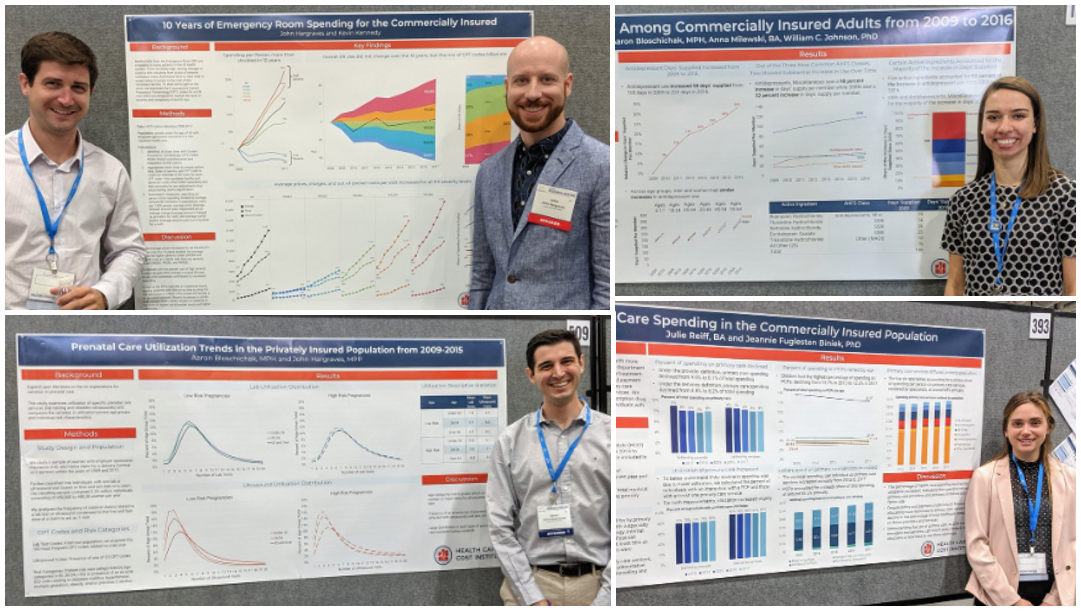 Read more: HCCI will be presenting at AcademyHealth’s 2019 Annual Research Meeting
The Health Care Cost Institute (HCCI) is proud to present five posters at the AcademyHealth 2019 Annual Research Meeting in Washington, D.C. These posters, which cover HCCI research on a wide variety of topics, focus on health care spending and utilization trends among the commercially insured population. If you are attending the conference, please check…
-
Children’s Health Spending: 2009-2012
Read more: Children’s Health Spending: 2009-2012The Children’s Health Care Spending: 2009-2012 report shows that spending on health care for privately insured children increased between 2009 and 2012, rising an average 5.5 percent a year, with more dollars spent on boys than girls, and higher spending on infants and toddlers (ages 0-3) than any other children’s age group. Key Findings…