
Publications
-
NBER: Why Don’t Commercial Health Plans Use Prospective Payment?
Tags: Commercially Insured, Geographic Variation, Inpatient Spending, Market Concentration, NBER, Peer Reviewed Journals Read more: NBER: Why Don’t Commercial Health Plans Use Prospective Payment?
ABSTRACT One of the key terms in contracts between hospitals and insurers is how the parties apportion the financial risk of treating unexpectedly costly patients. “Prospective” payment contracts give hospitals a lump-sum amount, depending on the medical condition of the patient, with limited adjustment for the level of services provided. We use data from the…
-
JAMA Pediatrics: Effects of Autism Spectrum Disorder Insurance Mandates on the Treated Prevalence of Autism Spectrum Disorder
Read more: JAMA Pediatrics: Effects of Autism Spectrum Disorder Insurance Mandates on the Treated Prevalence of Autism Spectrum DisorderABSTRACT Importance: Most states have passed insurance mandates requiring commercial health plans to cover services for children with autism spectrum disorder (ASD). Insurers have expressed concerns that these mandates will increase the number of children diagnosed with ASD (treated prevalence) and therefore increase costs associated with their care. To our knowledge, no published studies have…
-
Consumer-Driven Health Plans: A Cost and Utilization Analysis
Read more: Consumer-Driven Health Plans: A Cost and Utilization AnalysisThis data brief examines the health care use and spending from 2010-2014 for people who are enrolled in consumer-driven health plans (CDHPs), and compares these trends to non-CDHP enrollees. Findings indicate that although fewer total dollars were spent on health care for CDHP enrollees, they had higher per capita out-of-pocket spending on deductibles, copays, and…
-
JAMA Internal Medicine: Out-of-Pocket Spending for Hospitalizations Among Nonelderly Adults
Read more: JAMA Internal Medicine: Out-of-Pocket Spending for Hospitalizations Among Nonelderly AdultsABSTRACT Importance: Patients’ out-of-pocket spending for major health care expenses, such as inpatient care, may result in substantial financial distress. Limited contemporary data exist on out-of-pocket spending among nonelderly adults. Objectives: To evaluate out-of-pocket spending associated with hospitalizations and to assess how this spending varied over time and by patient characteristics, region, and type of…
-
Health Affairs: Medicare Advantage Plans Pay Hospitals Less Than Traditional Medicare Pays
Tags: Commercially Insured, Health Affairs, Inpatient Spending, Medicare, Medicare Advantage, Outpatient Spending, Peer Reviewed JournalsRead more: Health Affairs: Medicare Advantage Plans Pay Hospitals Less Than Traditional Medicare PaysABSTRACT There is ongoing debate about how prices paid to providers by Medicare Advantage plans compare to prices paid by fee-for-service Medicare. We used data from Medicare and the Health Care Cost Institute to identify the prices paid for hospital services by fee-for-service (FFS) Medicare, Medicare Advantage plans, and commercial insurers in 2009 and 2012….
-
Necessary versus Sufficient Claims Data
Read more: Necessary versus Sufficient Claims DataThis data brief compares membership characteristics and health care service prices in non-ERISA and ERISA populations. The results suggest that non-ERISA data may be sufficient for policy relevant analyses, even when ERISA data is not available.
-
2014 Diabetes Health Care Cost and Utilization Report
Read more: 2014 Diabetes Health Care Cost and Utilization ReportThe 2014 Diabetes Health Care Cost and Utilization Report examines how much is spent on health care for adults and children with diabetes, where those dollars are spent, and how that compares to people without diabetes. It is based on the health care claims of more than 40 million Americans younger than 65 covered by…
-
Journal of Telemedicine and Telecare: Reimbursements for telehealth services are likely to be lower than non-telehealth services in the United States
Read more: Journal of Telemedicine and Telecare: Reimbursements for telehealth services are likely to be lower than non-telehealth services in the United StatesABSTRACT: Telehealth technologies promise to increase access to care, particularly in underserved communities. However, little is known about how private payer reimbursements vary between telehealth and non-telehealth services. We use the largest private claims database in the United States provided by the Health Care Cost Institute to identify telehealth claims and compare average reimbursements to non-telehealth…
-
Children’s Health Spending Report 2010-2014
Read more: Children’s Health Spending Report 2010-2014Children’s Health Spending: 2010-2014 examines spending on health care for children covered by employer-sponsored insurance from 2010 to 2014. For the first time, HCCI analyzed children’s health care spending trends at the state level, reporting on Arizona, Connecticut, Florida, Illinois, Maryland, Ohio, Texas, Virginia, and Wisconsin, as well as the District of Columbia. Key…
-
National Chartbook of Health Care Prices 2015
 Read more: National Chartbook of Health Care Prices 2015
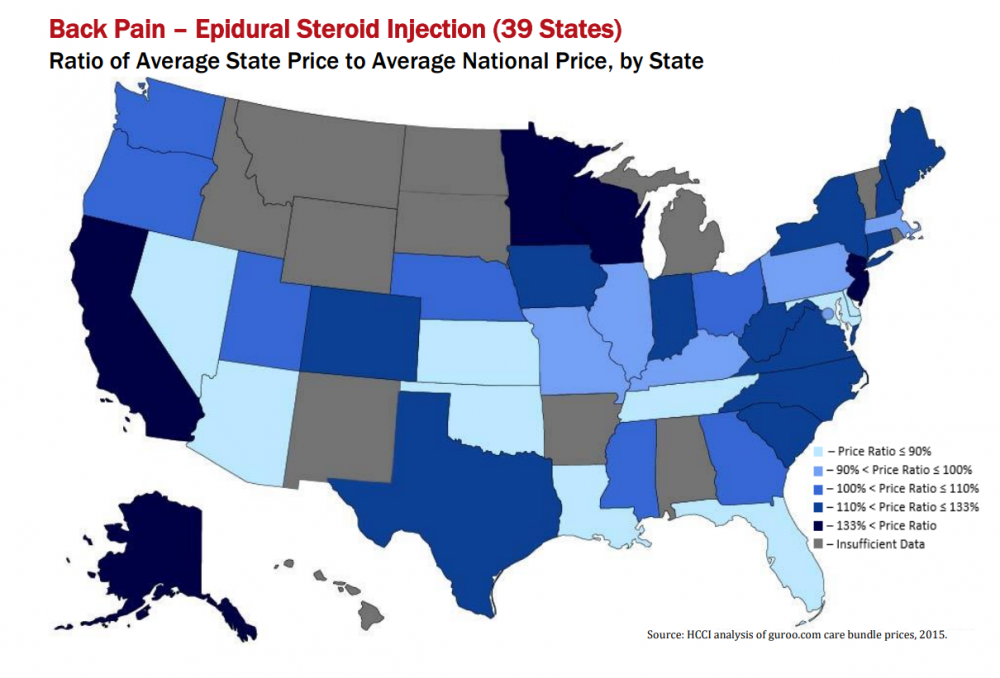
The National Chartbook of Health Care Prices – 2015 and accompanying Health Affairs article “Prices For Common Medical Services Vary Substantially Among the Commercially Insured” illuminates differences in price for over 240 common medical services in 41 states and the District of Columbia. Among the commercially insured, wide variation in prices have some states paying…