
Publications
-
Medical Care: The Differential Effects of Insurance Mandates on Health Care Spending for Children’s Autism Spectrum Disorder
Tags: Autism, Children, Commercially Insured, Inpatient Spending, Medical Care, Outpatient Spending, Peer Reviewed Journals Read more: Medical Care: The Differential Effects of Insurance Mandates on Health Care Spending for Children’s Autism Spectrum Disorder
ABSTRACT Objectives: There is substantial variation in treatment intensity among children with autism spectrum disorder (ASD). This study asks whether policies that target health care utilization for ASD affect children differentially based on this variation. Specifically, we examine the impact of state-level insurance mandates that require commercial insurers to cover certain treatments for ASD for…
-
Obstetrics & Gynecology: Rate of Pelvic Organ Prolapse Surgery Among Privately Insured Women in the United States, 2010-2013
 Read more: Obstetrics & Gynecology: Rate of Pelvic Organ Prolapse Surgery Among Privately Insured Women in the United States, 2010-2013
Abstract OBJECTIVE: To analyze utilization of, and payments for, pelvic organ prolapse procedures after the 2011 U.S. Food and Drug Administration (FDA) communication regarding transvaginal mesh. METHODS: This is a retrospective cohort study examining private claims from three insurance providers for inpatient and outpatient prolapse procedures from 2010 to 2013 in the Health Care Cost…
-
How common is your health care spending?
Tags: Top Spenders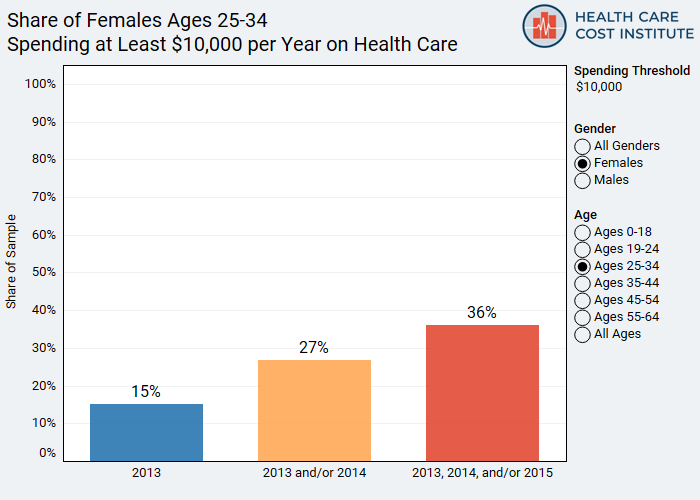 Read more: How common is your health care spending?
It is well documented that Americans spend a lot on health care, but this issue is often discussed in terms of share of GDP, billions of dollars, or an astoundingly high hospital bill. These numbers can be hard to relate to; it’s hard to imagine billions of dollars, let alone a share of the national…
-
Health Affairs: Health Spending Growth Is Accelerating; Prices Are In The Driver’s Seat
Read more: Health Affairs: Health Spending Growth Is Accelerating; Prices Are In The Driver’s SeatHEALTH AFFAIRS BLOG: “Perhaps nothing illustrates the intractability of America’s struggle with health spending more than the recent announcement by Amazon, JP Morgan, and Berkshire Hathaway that they were founding a new entity to address health care costs for their employees. Despite lacking any concrete details this announcement managed to wipe billions of dollars in…
-
NBER: Hospital Pricing and Public Payments
Tags: Affordable Care Act, Inpatient Spending, NBER, Peer Reviewed Journals, Readmissions, Value Based CareRead more: NBER: Hospital Pricing and Public PaymentsABSTRACT: A longstanding debate in health economics and health policy concerns how hospitals adjust prices with private insurers following reductions in public funding. A common argument is that hospitals engage in some degree of “cost-shifting,” wherein hospitals increase prices with private insurers in response to a reduction in public payments; however, evidence of significant costshifting is…
-
New England Journal of Medicine: Consistently High Turnover in the Group of Top Health Care Spenders
 Read more: New England Journal of Medicine: Consistently High Turnover in the Group of Top Health Care Spenders
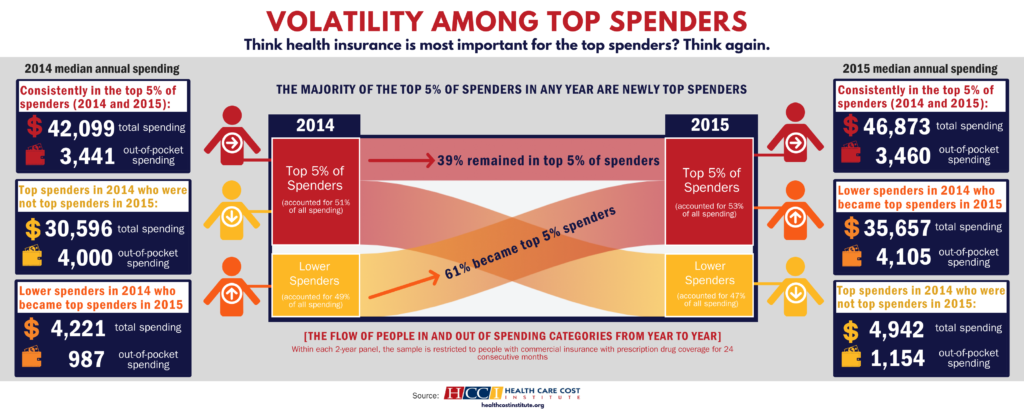
NEJM CATALYST: “The concentration of most U.S. health care spending in a small proportion of individuals is well documented. The notion that high health care spending only affects a small portion of people in a given year is particularly relevant to the ongoing policy debate about how to make health insurance affordable for all, while…
-
Top Spenders Among the Commercially Insured Increased Spending Concentration and Consistent Turnover from 2013 to 2015
Tags: Commercially Insured, Drug Spending, Inpatient Spending, Out-of-Pocket, Outpatient Spending, Physician Spending, Top Spenders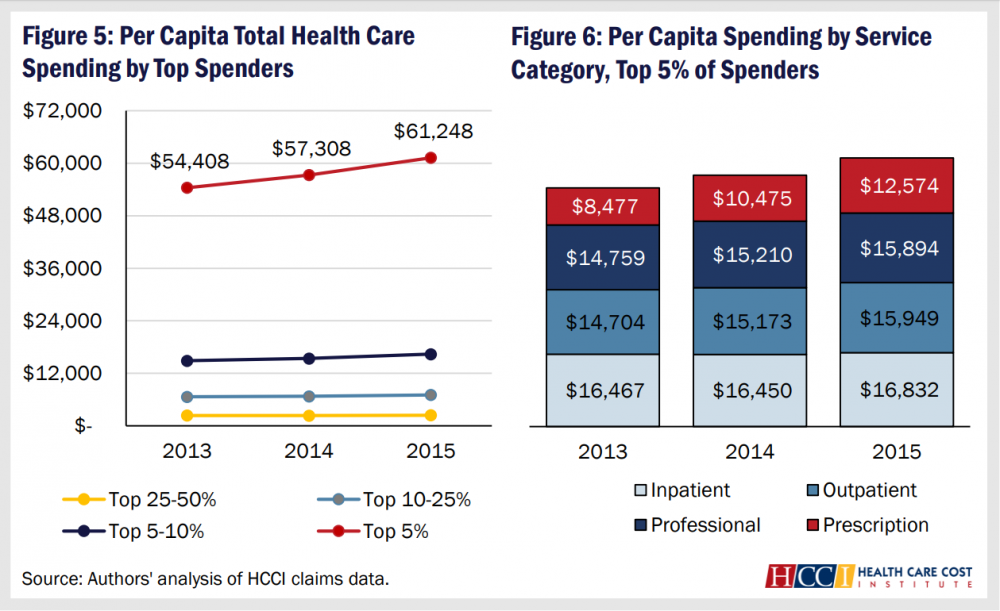 Read more: Top Spenders Among the Commercially Insured Increased Spending Concentration and Consistent Turnover from 2013 to 2015
This issue brief explores the distribution of health care spending among commercially insured individuals, with a focus on the top 5 percent of spenders and turnover within that group from year to year. It considers the share of spending incurred by this group of top spenders, how those dollars are distributed among the health care…
-
Workers in low income counties more likely to be long-term opioid users
 Read more: Workers in low income counties more likely to be long-term opioid users
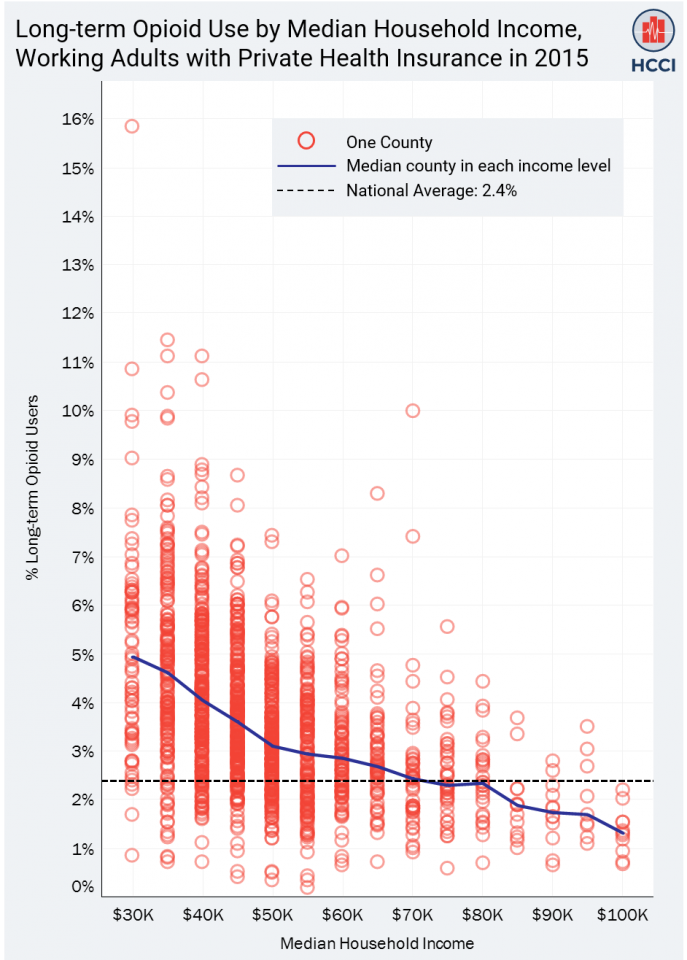
Past literature has found links between higher opioid use and local economic conditions for people enrolled in public health programs, but there has been little discussion of whether this relationship occurs among the privately insured. Using HCCI claims data and county level income data from the US Census Bureau, we examined how a county’s median…
-
Health Affairs: Understanding Health Spending – Lessons From The Healthy Marketplace Index
Read more: Health Affairs: Understanding Health Spending – Lessons From The Healthy Marketplace IndexHEALTH AFFAIRS BLOG: “As policymakers consider actions to address challenges with the Affordable Care Act and ongoing growth in health spending, the importance of understanding local health care market dynamics is more important than ever. Traditionally, policy makers and other stakeholders have evaluated commercial health care markets’ total spending and often attributed high spending to…
-
ER spending increased 85%, driven by price increases for the most severe cases (2009-2015)
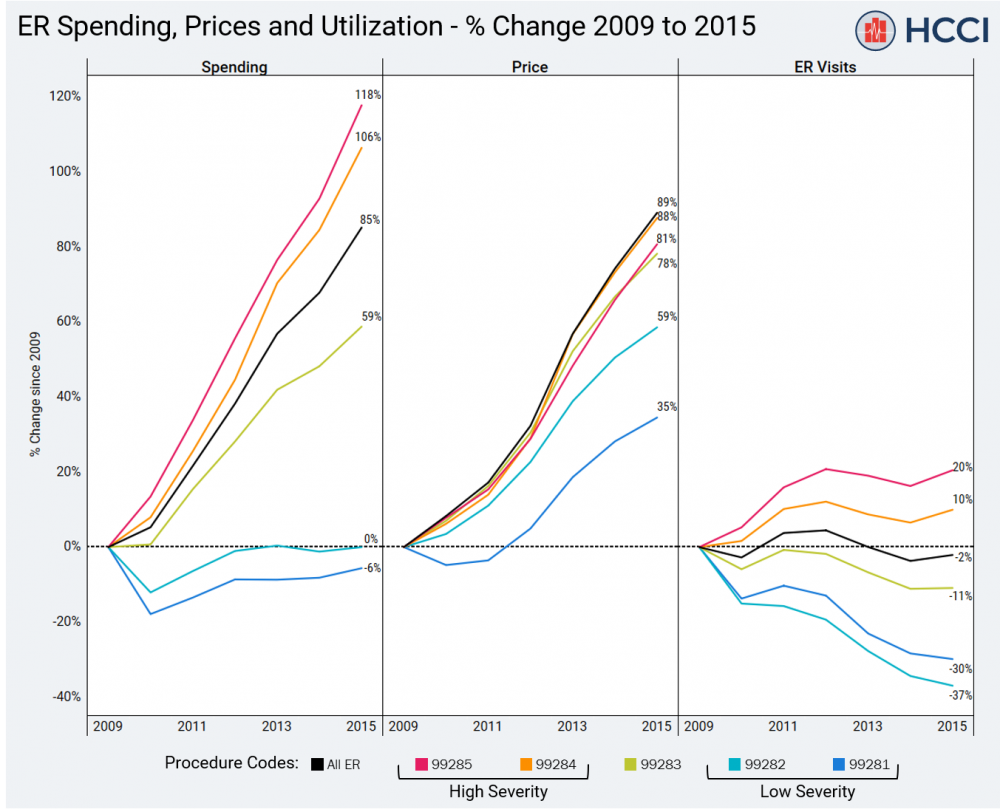 Read more: ER spending increased 85%, driven by price increases for the most severe cases (2009-2015)
Medical bills from the Emergency Room (ER) are a mystery to many patients in the US health system. From incredibly high, varying charges to surprise bills resulting from in/out of network confusion, many Americans have no idea what to expect when it comes to the cost of this necessary service. Recently, Vox reporter, Sarah Kliff,…