Publications
-
The Society of Actuaries: Predicting High-Cost Members in the HCCI Database
 Read more: The Society of Actuaries: Predicting High-Cost Members in the HCCI Database
Abstract: Using the Health Care Cost Institute (HCCI) database, which contains claim information on approximately 47 million members annually over a seven-year time period, we examined which characteristics best predict and describe high-cost members. We found that cost history, age, gender and prescription drug coverage are all predictors of future high costs, with cost history…
-
Medical Care Research and Review: Prices for Physicians’ Services in Medicare Advantage and Commercial Plans
Tags: Commercially Insured, Medicare Advantage, Out-of-Network, Peer Reviewed Journals, Physician Spending, PricesRead more: Medical Care Research and Review: Prices for Physicians’ Services in Medicare Advantage and Commercial PlansABSTRACT: The prices that insurers pay physicians ultimately affect beneficiaries’ health insurance premiums. Using 2014 claims data from three major insurers, we analyzed the prices insurers paid in their Medicare Advantage (MA) and commercial plans for 20 physician services, in and out of network, and compared those prices with estimated amounts that Medicare’s fee-for-service (FFS) program…
-
INQUIRY The Journal of Health Care Organization, Provision, and Financing: How do the Hospital Prices Paid by Medicare Advantage Plans and Commercial Plans Compare with Medicare Fee-for-Service Prices?
Tags: Commercially Insured, Inpatient Spending, Medicare, Medicare Advantage, Peer Reviewed Journals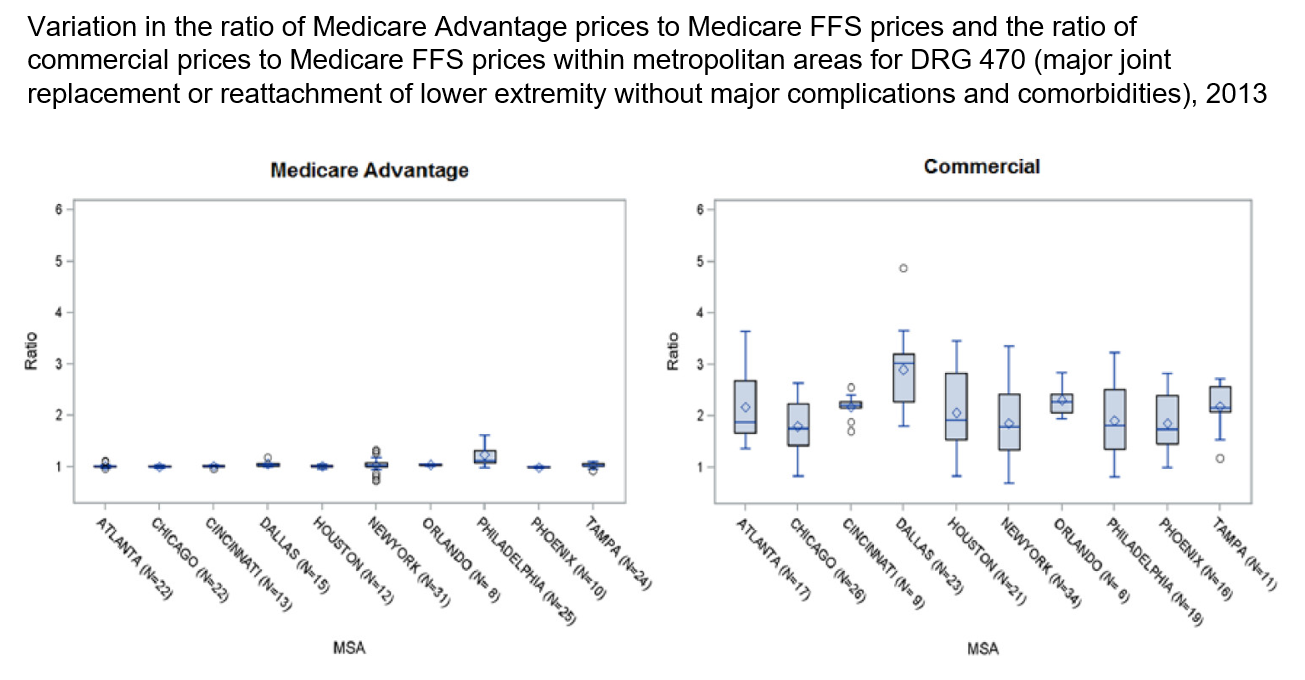 Read more: INQUIRY The Journal of Health Care Organization, Provision, and Financing: How do the Hospital Prices Paid by Medicare Advantage Plans and Commercial Plans Compare with Medicare Fee-for-Service Prices?
ABSTRACT The prices that private insurers pay hospitals have received considerable attention in recent years, but most of that literature has focused on the commercially insured population. Although nearly one-third of Medicare beneficiaries are enrolled in a Medicare Advantage (MA) plan, little is known about the prices paid to hospitals by the private insurers that…
-
ER spending among the commercially insured continued to rise in 2016, driven by the price and use of high severity cases (2009-2016)
Tags: Commercially Insured, Emergency Room, Geographic Variation, Outpatient Spending, Prices, Utilization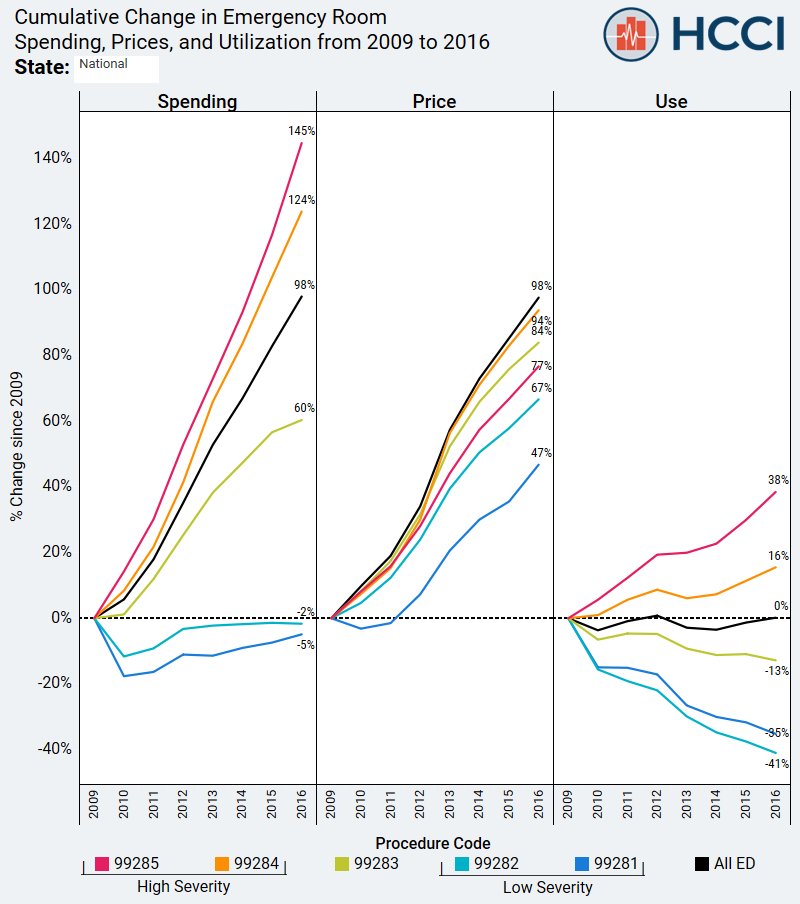 Read more: ER spending among the commercially insured continued to rise in 2016, driven by the price and use of high severity cases (2009-2016)
HCCI recently expanded its reporting on emergency room (ER) spending trends to include the most recent data available (2016). We characterize trends in spending, price, and utilization for the five Current Procedural Terminology (CPT) codes designed to capture the level of severity and complexity of every ER visit. While average prices for all five ER…
-
Health Services Research: Physical Therapy as the First Point of Care to Treat Low Back Pain: An Instrumental Variables Approach to Estimate Impact on Opioid Prescription, Health Care Utilization, and Costs
Tags: Commercially Insured, Emergency Room, HSR, Opioids, Out-of-Pocket, Peer Reviewed Journals, UtilizationRead more: Health Services Research: Physical Therapy as the First Point of Care to Treat Low Back Pain: An Instrumental Variables Approach to Estimate Impact on Opioid Prescription, Health Care Utilization, and CostsABSTRACT Objective: To compare differences in opioid prescription, health care utilization, and costs among patients with low back pain (LBP) who saw a physical therapist (PT) at the first point of care, at any time during the episode or not at all. Data Sources: Commercial health insurance claims data, 2009–2013. Study Design: Retrospective analyses using…
-
NBER: The Price Ain’t Right? Hospital Prices and Health Spending on the Privately Insured
Tags: Commercially Insured, Inpatient Spending, Market Concentration, NBER, Outpatient Spending, Peer Reviewed Journals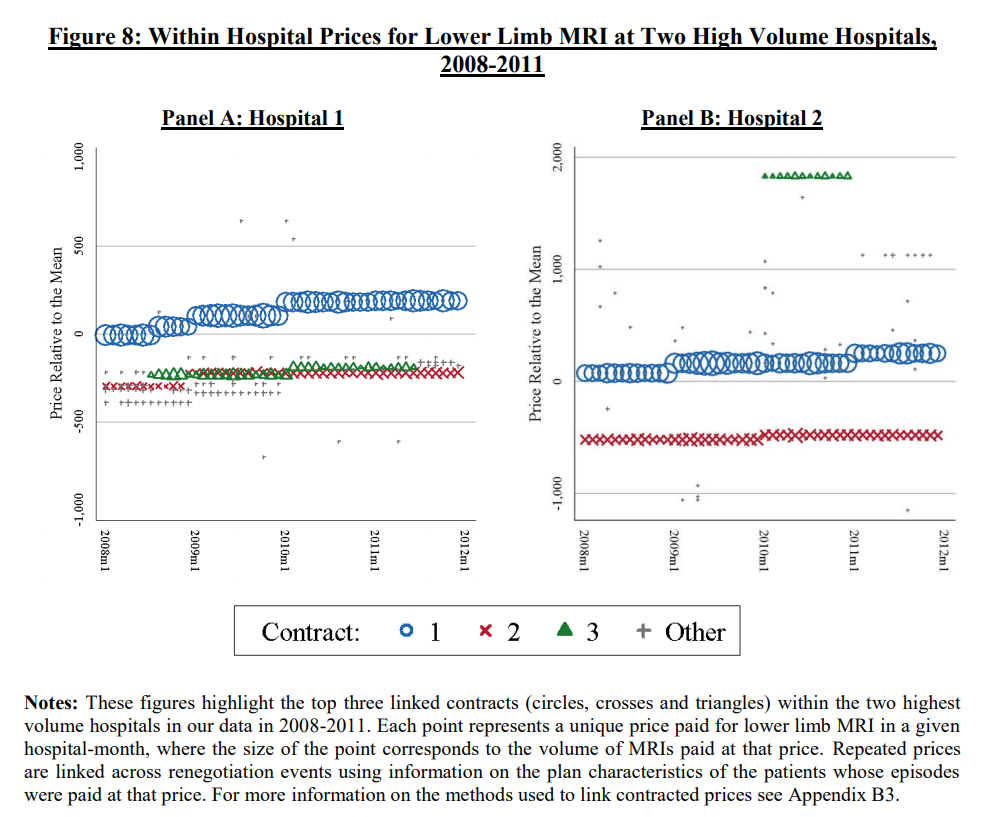 Read more: NBER: The Price Ain’t Right? Hospital Prices and Health Spending on the Privately Insured
ABSTRACT: We use insurance claims data covering 28 percent of individuals with employer-sponsored health insurance in the US to study the variation in health spending on the privately insured, examine the structure of insurer-hospital contracts, and analyze the variation in hospital prices across the nation. Health spending per privately insured beneficiary differs by a factor of…
-
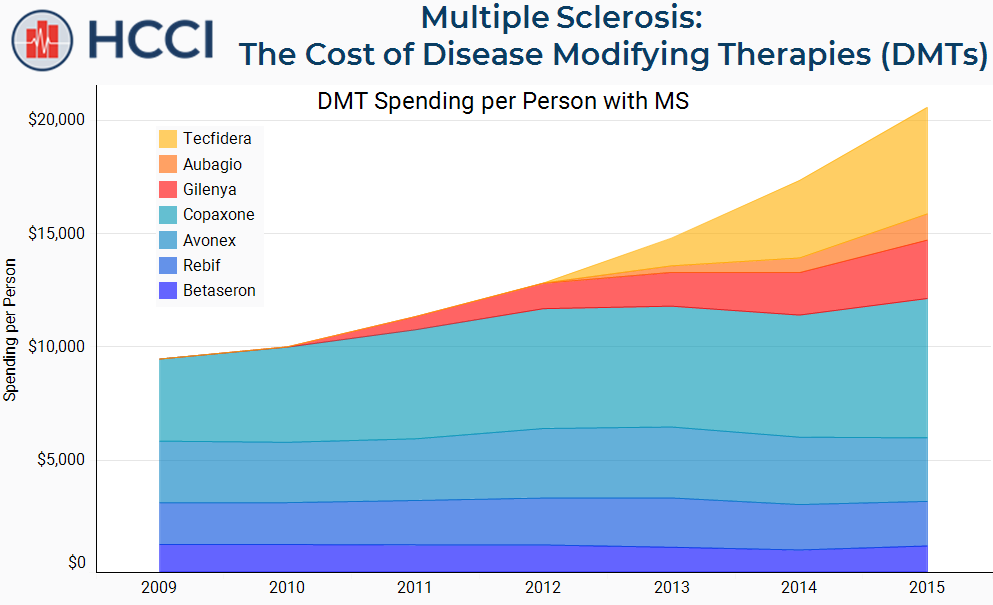
Interactive Tool: Disease Modifying Therapies Drove 82% of Total Increase in Health Care Spending for People with Multiple Sclerosis
 Read more: Interactive Tool: Disease Modifying Therapies Drove 82% of Total Increase in Health Care Spending for People with Multiple Sclerosis
In a recent issue brief, HCCI found that the already high cost of care for people with multiple sclerosis (MS) rose dramatically over the past several years. The primary driver was the increasing cost of a small group of prescription drugs called Disease Modifying Therapies (DMTs). To illustrate the role prescription drug prices play in…
-
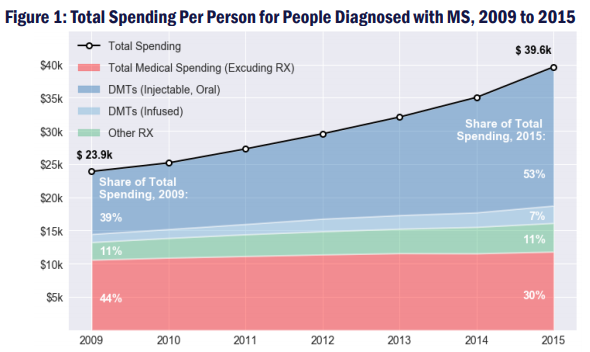
The Rising Cost of Specialty Drugs Drove Spending Increases for People with Multiple Sclerosis
 Read more: The Rising Cost of Specialty Drugs Drove Spending Increases for People with Multiple Sclerosis
This issue brief investigates how the cost of prescription drugs affects the total cost of care for people with multiple sclerosis (MS). It decomposes total health care spending by category, specifically separating out spending on specialty drugs used to treat MS, called Disease Modifying Therapies (DMTs). The issue brief subsequently examines whether changes in spending…
-
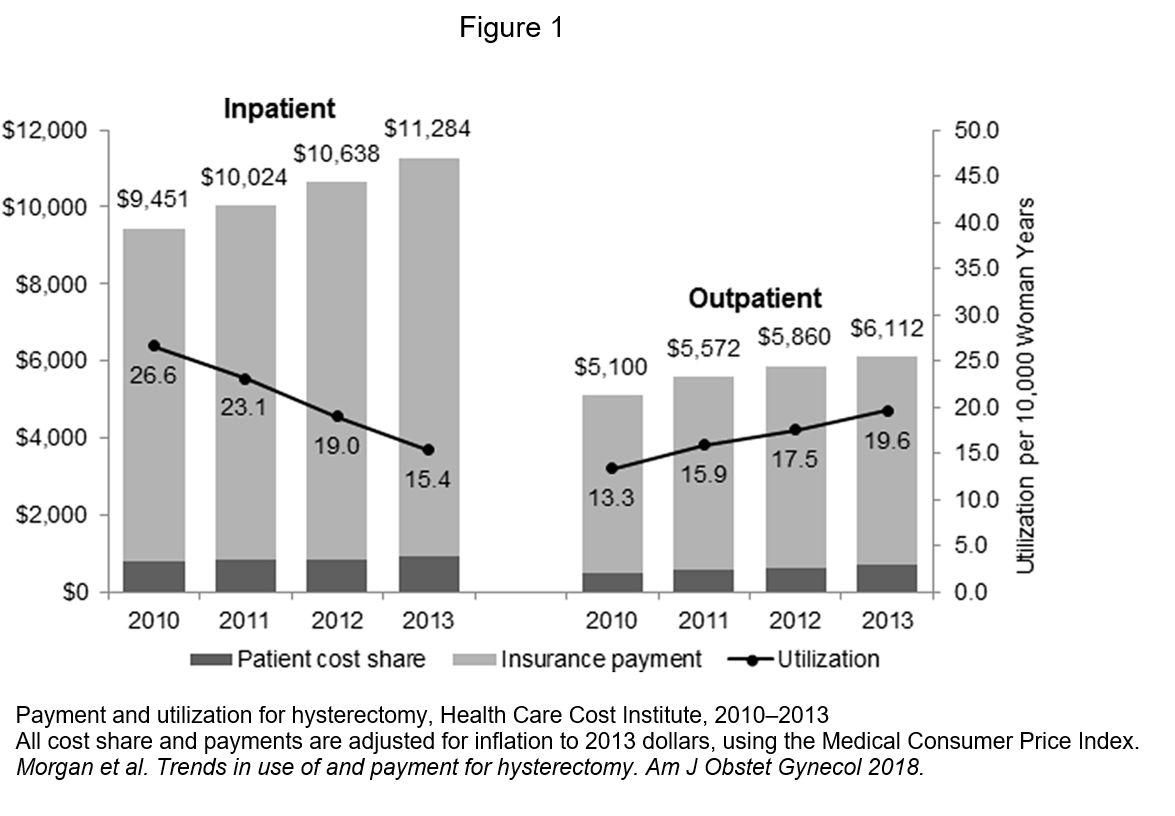
American Journal of Obstetrics & Gynecology: Nationwide trends in the utilization of and payments for hysterectomy in the United States among commercially insured women
 Read more: American Journal of Obstetrics & Gynecology: Nationwide trends in the utilization of and payments for hysterectomy in the United States among commercially insured women
ABSTRACT Background: Laparotomy followed by inpatient hospitalization has traditionally been the most common surgical care for hysterectomy. The financial implications of the increased use of laparoscopy and outpatient hysterectomy are unknown. Objectives: The objective of the study was to quantify the increasing use of laparoscopy and outpatient hysterectomy and to describe the financial implications among…
-
Under Pressure – Adults with Hypertension are Spending Increasingly More on Health Care
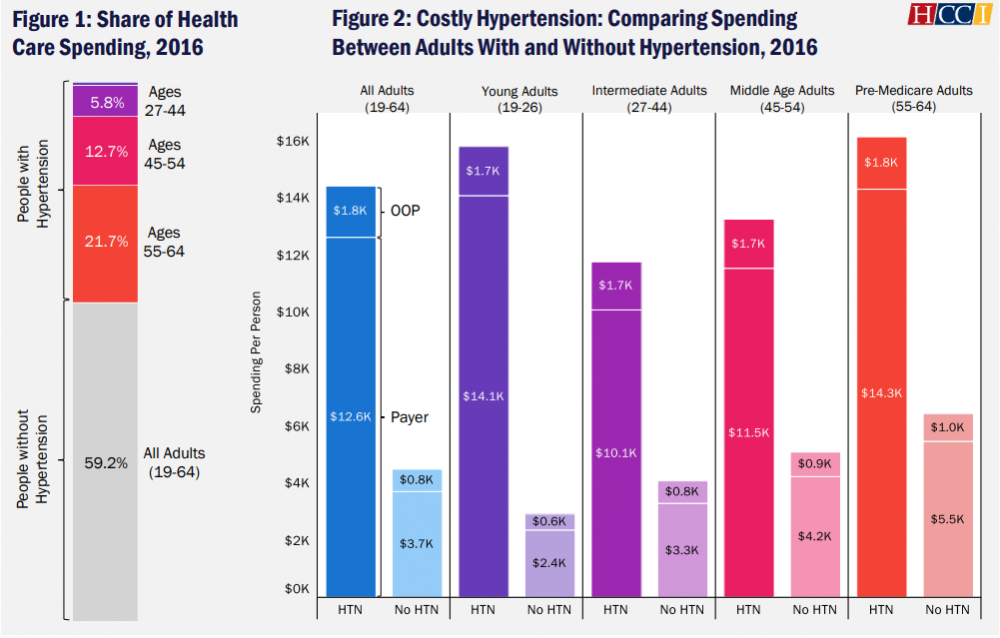 Read more: Under Pressure – Adults with Hypertension are Spending Increasingly More on Health Care
This issue brief compares trends in health care spending from 2012 to 2016 for adults with employer-sponsored insurance who were diagnosed with hypertension to those not diagnosed with hypertension. It also considers how changes in prescription drug spending compare to changes in prescription drug use for adults with a hypertension diagnosis.