
Publications
-
Trends In Primary Care Visits
 Read more: Trends In Primary Care Visits
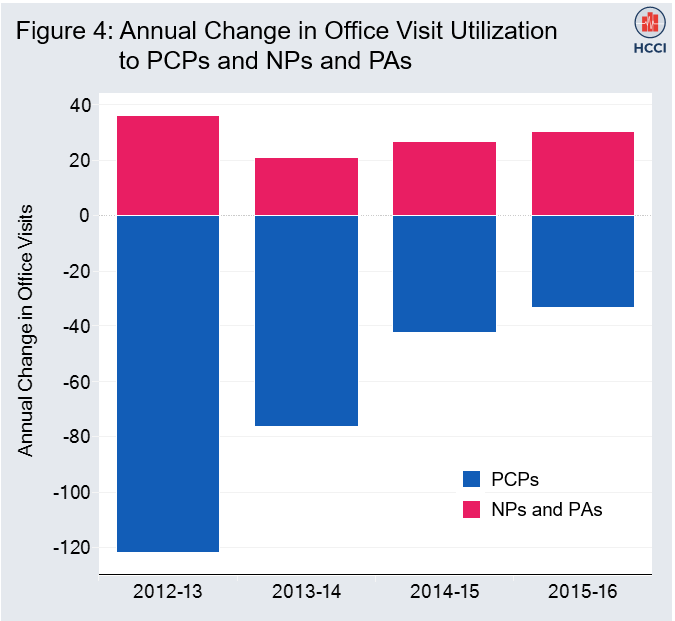
Office visits to primary care physicians (PCPs) declined 18 percent from 2012 to 2016 for adults under 65 years old with employer-sponsored health insurance, while office visits to nurse practitioners (NPs) and physician assistants (PAs) increased 129 percent. Comparing 2012 to 2016, there were 273 fewer office visits per 1,000 insured individuals to primary care…
-
American Academy of Actuaries: Estimating the Potential Health Care Savings of Reference Pricing
 Read more: American Academy of Actuaries: Estimating the Potential Health Care Savings of Reference Pricing
Executive Summary: High and rising health care prices play a major role in the persistent increases in health care spending. This study, undertaken by the American Academy of Actuaries Health Practice Council, explores the potential for reference pricing to counter high health care prices and contain health care spending growth. Reference pricing is a system…
-
International Journal of Radiation Oncology: Impact of Medicare Advantage Enrollment on Utilization of Intensity-Modulated Radiation Therapy and Cost of Care for Cancer Treatment
Read more: International Journal of Radiation Oncology: Impact of Medicare Advantage Enrollment on Utilization of Intensity-Modulated Radiation Therapy and Cost of Care for Cancer TreatmentAbstract: Intensity-modulated radiation therapy (IMRT) is an important driver of rising costs in oncology care, but the level of evidence supporting its routine use varies across disease sites, including breast, lung, and prostate. While Medicare Advantage (MA) plans have incentives to reduce health care spending, the effect of MA enrollment on utilization of high-cost medical…
-
Understanding how price growth affected areas differently across the country
 Read more: Understanding how price growth affected areas differently across the country
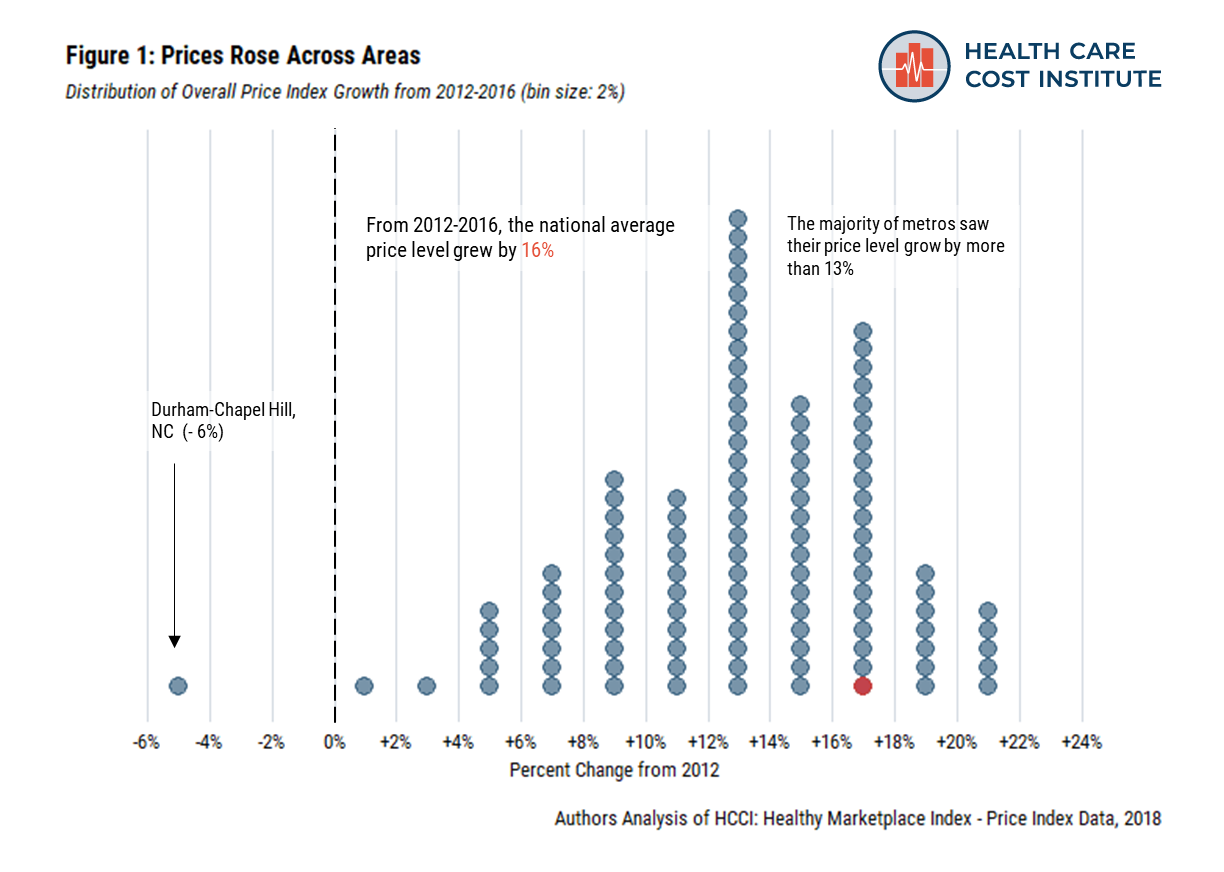
Recently, the Health Care Cost Institute (HCCI) published its Healthy Marketplace Index (HMI) – Price Index report, examining relative health care prices in 112 different metropolitan areas. This report is the first in a new series of releases from the HMI project, funded by the Robert Wood Johnson Foundation, which compares commercial health care markets…
-
Health Affairs: Assessing The Impact Of State Policies For Prescription Drug Monitoring Programs On High-Risk Opioid Prescriptions
Tags: Commercially Insured, Geographic Variation, Health Affairs, Opioids, Peer Reviewed Journals, UtilizationRead more: Health Affairs: Assessing The Impact Of State Policies For Prescription Drug Monitoring Programs On High-Risk Opioid PrescriptionsABSTRACT: Policies and practices have proliferated to optimize prescribers’ use of their states’ prescription drug monitoring programs, which are statewide databases of controlled substances dispensed at retail pharmacies. Our study assessed the effectiveness of three such policies: comprehensive legislative mandates to use the program, laws that allow prescribers to delegate its use to office staff,…
-
Health Affairs: Health Care Spending Under Employer-Sponsored Insurance: A 10-Year Retrospective
Tags: Commercially Insured, Drug Spending, Health Affairs, Inpatient Spending, Outpatient Spending, Peer Reviewed Journals, Physician Spending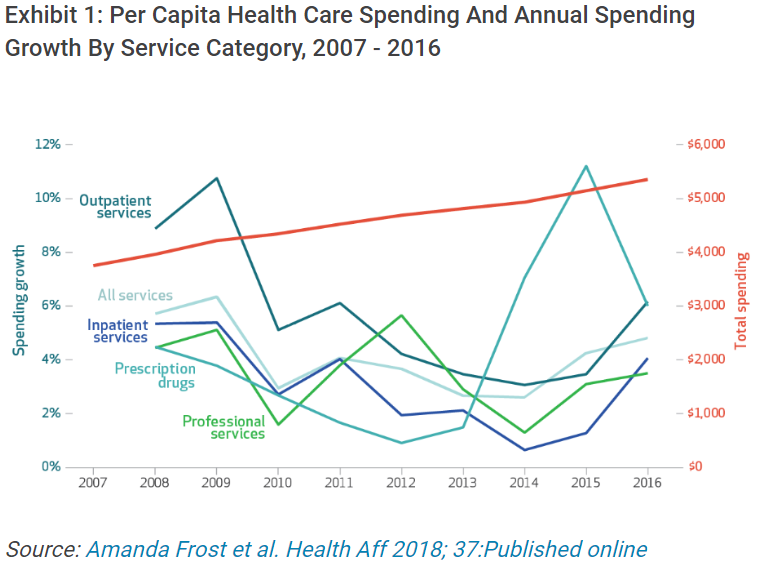 Read more: Health Affairs: Health Care Spending Under Employer-Sponsored Insurance: A 10-Year Retrospective
ABSTRACT Using a national sample of health care claims data from the Health Care Cost Institute, we found that total spending per capita (not including premiums) on health services for enrollees in employer-sponsored insurance plans increased by 44 percent from 2007 through 2016 (average annual growth of 4.1 percent). Spending increased across all major categories…
-
American Journal of Health Economics: Why Don’t Commercial Health Plans Use Prospective Payment?
Read more: American Journal of Health Economics: Why Don’t Commercial Health Plans Use Prospective Payment?Abstract: One of the key terms in contracts between hospitals and insurers is how the parties apportion the financial risk of treating unexpectedly costly patients. “Prospective” payment contracts give hospitals a lump-sum amount, depending on the medical condition of the patient, with limited adjustment for the level of services provided. We use data from the…
-
Journal of General Internal Medicine: First Opioid Prescription and Subsequent High-Risk Opiod Use, a National Survey of Privately Insured and Medicare Advantage Adults
Read more: Journal of General Internal Medicine: First Opioid Prescription and Subsequent High-Risk Opiod Use, a National Survey of Privately Insured and Medicare Advantage AdultsBACKGROUND: National guidelines make recommendations regarding the initial opioid prescriptions, but most of the supporting evidence is from the initial episode of care, not the first prescription. OBJECTIVE: To examine associations between features of the first opioid prescription and high-risk opioid use in the 18 months following the first prescription. DESIGN: Retrospective cohort study using data from a large commercial insurance…
-
ER facility prices grew in tandem with faster-growing charges from 2009-2016
 Read more: ER facility prices grew in tandem with faster-growing charges from 2009-2016
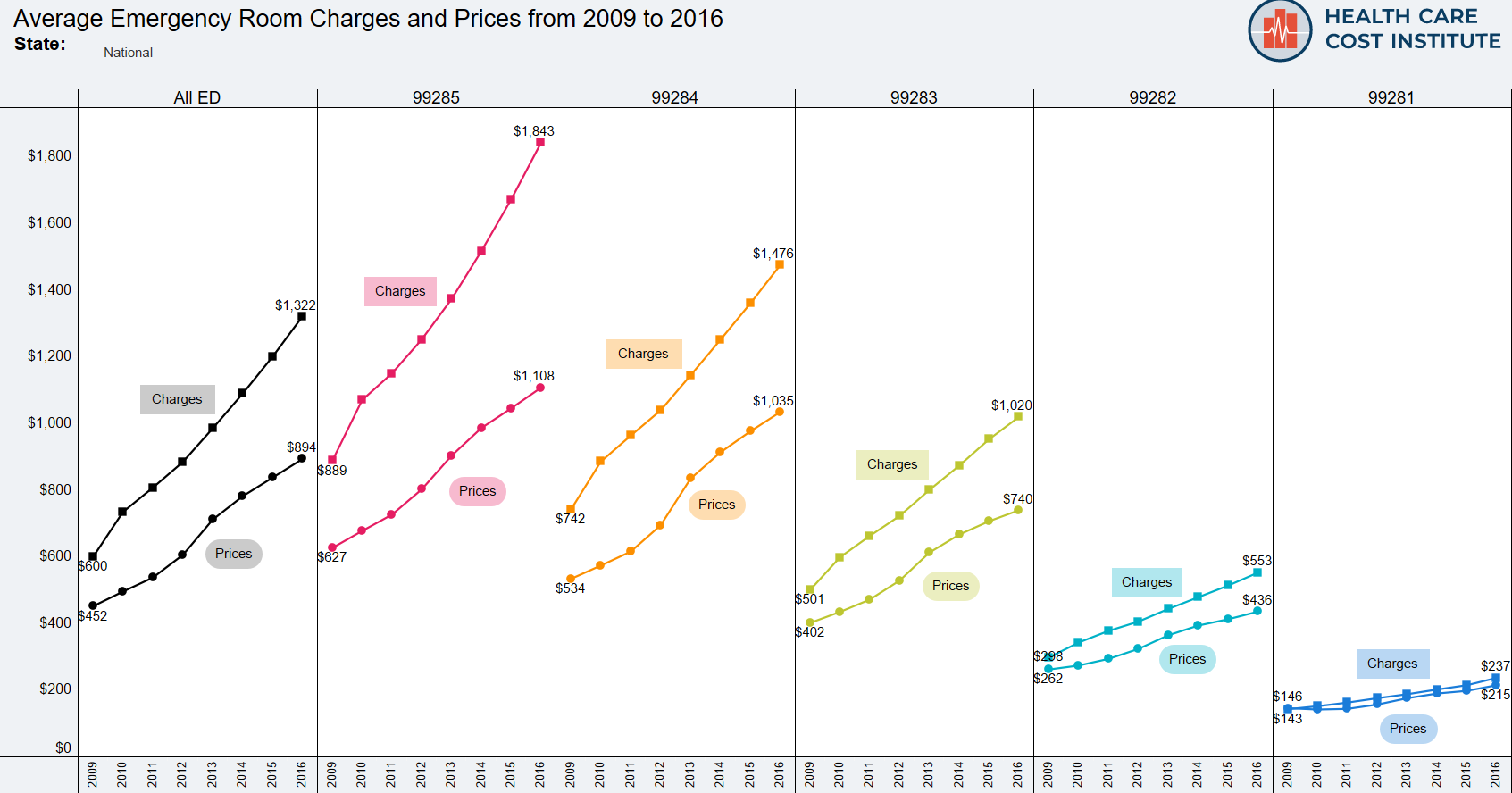
HCCI often reports the prices of health care services, defined as the average amount a provider is paid for a given service based on negotiations with health care insurers. These prices typically represent a portion of charges, which are the amounts health care providers bill for the procedures they perform. The charge amount is often…
-
The Quarterly Journal of Economics: The Price Ain’t Right? Hospital Prices and Health Spending on the Privately Insured
Read more: The Quarterly Journal of Economics: The Price Ain’t Right? Hospital Prices and Health Spending on the Privately InsuredAbstract: We use insurance claims data covering 28% of individuals with employer-sponsored health insurance in the United States to study the variation in health spending on the privately insured, examine the structure of insurer-hospital contracts, and analyze the variation in hospital prices across the nation. Health spending per privately insured beneficiary differs by a factor…