Publications
-
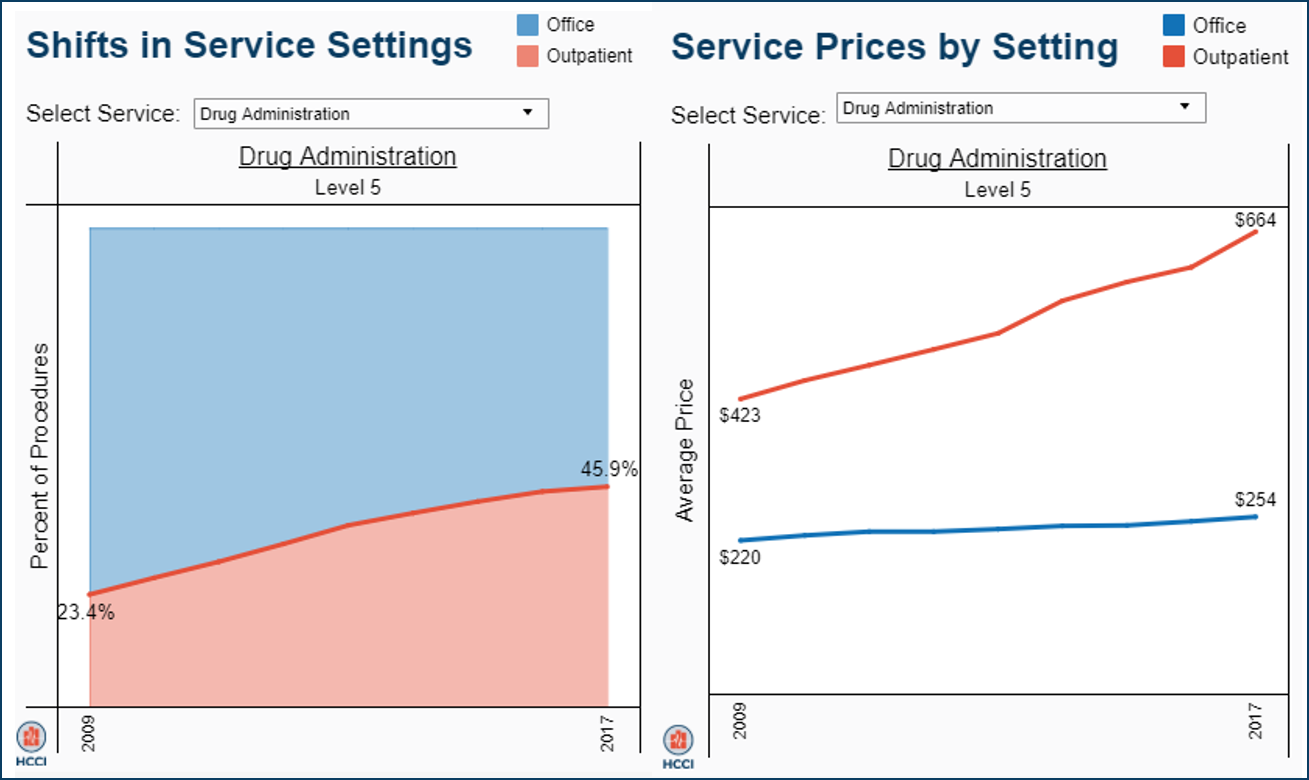
Shifting Care from Office to Outpatient Settings: Services are Increasingly Performed in Outpatient Settings with Higher Prices
 Read more: Shifting Care from Office to Outpatient Settings: Services are Increasingly Performed in Outpatient Settings with Higher Prices
Where people receive health care matters, especially in terms of costs. The same services may have a much higher price tag when performed in one setting rather than another, but this price difference is rarely publicized to patients. To understand what settings people used and how prices differed, we looked at the utilization and average…
-
American Economic Journal: Applied Economics: Health Care Spending and Utilization in Public and Private Medicare
Tags: American Economic Journal: Applied Economics, Medicare, Medicare Advantage, Peer Reviewed Journals, Spending, Utilization Read more: American Economic Journal: Applied Economics: Health Care Spending and Utilization in Public and Private Medicare
Abstract: We compare health care spending in public and private Medicare using newly available claims data from Medicare Advantage (MA) insurers. MA insurer revenues are 30 percent higher than their health care spending. Adjusting for enrollee mix, health care spending per enrollee in MA is 9 to 30 percent lower than in Traditional Medicare (TM),…
-
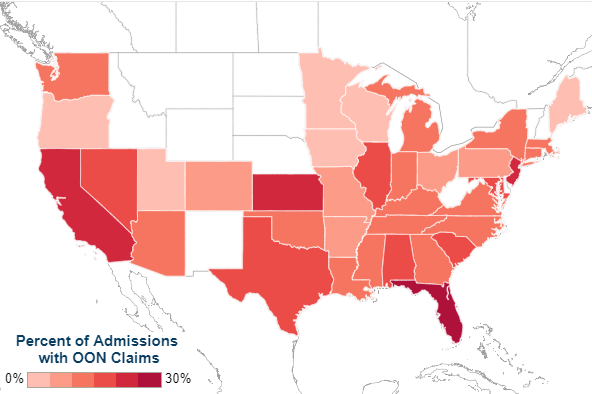
Surprise out-of-network medical bills during in-network hospital admissions varied by state and medical specialty, 2016
 Read more: Surprise out-of-network medical bills during in-network hospital admissions varied by state and medical specialty, 2016
Out-of-network billing practices have increasingly garnered attention as individuals with commercial health insurance continue to experience “surprise billing.” A surprise medical bill commonly describes a charge to a patient for care delivered by an out-of-network (OON) professional who works within an in-network facility. We used the Health Care Cost Institute’s (HCCI) vast commercial claims database to…
-
BMC Public Health: Area-Level Deprivation and Preterm Birth: Results from a National, Commercially-Insured Population
Read more: BMC Public Health: Area-Level Deprivation and Preterm Birth: Results from a National, Commercially-Insured PopulationAbstract Background: Area-level deprivation is associated with multiple adverse birth outcomes. Few studies have examined the mediating pathways through which area-level deprivation affects these outcomes. The objective of this study was to investigate the association between area-level deprivation and preterm birth, and examine the mediating effects of maternal medical, behavioural, and psychosocial factors. Methods: We conducted a…
-
Health Affairs: Variation In Health Spending Growth For The Privately Insured From 2007 to 2014
Read more: Health Affairs: Variation In Health Spending Growth For The Privately Insured From 2007 to 2014ABSTRACT We examined the growth in health spending on people with employer-sponsored private insurance in the period 2007–14. Our analysis relied on information from the Health Care Cost Institute data set, which includes insurance claims from Aetna, Humana, and UnitedHealthcare. In the study period private health spending per enrollee grew 16.9 percent, while growth in…
-
Health Affairs: Medicare Advantage And Commercial Prices For Mental Health Services
Tags: Commercially Insured, Health Affairs, Medicare Advantage, Mental Health and Substance Use, Peer Reviewed JournalsRead more: Health Affairs: Medicare Advantage And Commercial Prices For Mental Health ServicesAbstract: In 2014, insurers paid an average of 13–14 percent less for in-network mental health services in their commercial and Medicare Advantage plans than fee-for-service Medicare paid for identical services—despite paying up to 12 percent more than Medicare when the same services were provided by other physician specialties. However, patients went out of network more…
-
Health Affairs: Hospital Prices Grew Substantially Faster Than Physician Prices For Hospital-Based Care In 2007–14
Read more: Health Affairs: Hospital Prices Grew Substantially Faster Than Physician Prices For Hospital-Based Care In 2007–14Abstract: Evidence suggests that growth in providers’ prices drives growth in health care spending on the privately insured. However, existing work has not systematically differentiated between the growth rate of hospital prices and that of physician prices. We analyzed growth in both types of prices for inpatient and hospital-based outpatient services using actual negotiated prices…
-
Spending on Individuals with Type 1 Diabetes and the Role of Rapidly Increasing Insulin Prices
 Read more: Spending on Individuals with Type 1 Diabetes and the Role of Rapidly Increasing Insulin Prices
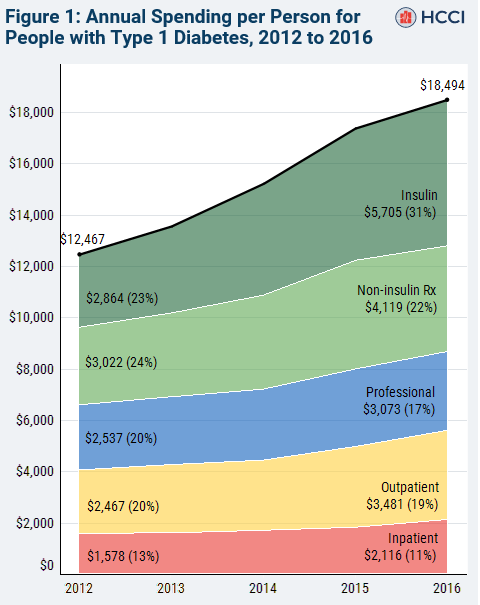
We used health care claims data to investigate trends in total health care spending on individuals with type 1 diabetes between 2012 and 2016. We found a rapid increase in total health care spending, driven primarily by gross spending on insulin that doubled over the period. During that time insulin use rose only modestly. While…
-
Medical Care: Competition in Outpatient Procedure Markets
Read more: Medical Care: Competition in Outpatient Procedure MarketsAbstract Background: More than half of all medical procedures performed in the United States occur in an outpatient setting, yet few studies have explored how competition among ambulatory surgery centers (ASCs) and hospitals affects prices for commercially insured outpatient services. Objectives: We examined the association between prices for commercially insured outpatient procedures and competition among ASCs and…
-
American Academy of Pediatrics: Insurance Mandates and Out-of-Pocket Spending for Children With Autism Spectrum Disorder
Read more: American Academy of Pediatrics: Insurance Mandates and Out-of-Pocket Spending for Children With Autism Spectrum DisorderABSTRACT BACKGROUND: The health care costs associated with treating autism spectrum disorder (ASD) in children can be substantial. State-level mandates that require insurers to cover ASD-specific services may lessen the financial burden families face by shifting health care spending to insurers. METHODS: We estimated the effects of ASD mandates on out-of-pocket spending, insurer spending, and…