
Publications
-
Real World Consequences of the Qualifying Payment Amount in the No Surprises Act
Tags: Surprise Billing Read more: Real World Consequences of the Qualifying Payment Amount in the No Surprises Act
The United States Congress passed the No Surprises Act last year, offering several protections to consumers. Beginning in 2022, providers can no longer bill patients for more than their insurance’s in-network cost sharing. The law also bans balance billing except in situations where a patient is notified in advance and their written consent is obtained….
-
JAMA Health Forum: Comparison of Anticancer Medication Use and Spending Under US Oncology Parity Laws With and Without Out-of-Pocket Spending Caps
Tags: SpendingRead more: JAMA Health Forum: Comparison of Anticancer Medication Use and Spending Under US Oncology Parity Laws With and Without Out-of-Pocket Spending CapsAbstract: IMPORTANCE By 2020, nearly all states had adopted oncology parity laws in the US, ensuring that patients in fully insured private health plans pay no more for orally administered anticancer medications (OAMs) than infused therapies. Between 2013 and mid-2017, 11 states implemented parity with out-of-pocket spending caps, which may further reduce patient out-of-pocket spending….
-
2019 Health Care Cost and Utilization Report
 Read more: 2019 Health Care Cost and Utilization Report
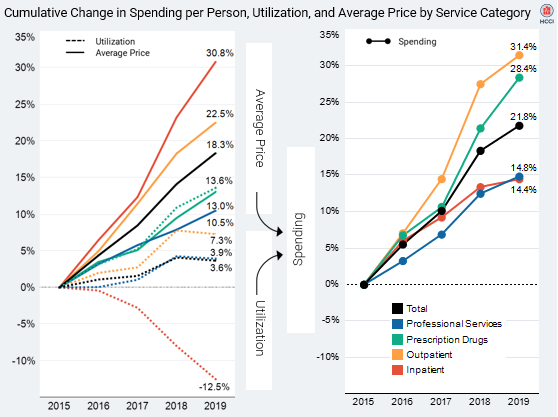
The 2019 Health Care Cost and Utilization Report presents data on health care spending, utilization, and average prices from 2015 through 2019 for individuals under the age of 65 who receive health insurance coverage through an employer. This report examines trends within four categories of service: inpatient admissions, outpatient visits and procedures, professional services, and prescription drugs. All data…
-
NYS Health Foundation: Variation in Health Care Prices: The Problem Starts at Birth
Tags: Maternal HealthRead more: NYS Health Foundation: Variation in Health Care Prices: The Problem Starts at BirthSummary The price of childbirth in New York City varies multifold, depending on where a woman delivers. This variation in price across boroughs, and across providers within boroughs, might make sense if it corresponded to higher-quality care. But higher prices do not always signify better quality. This report examines variation in what is paid for…
-
Health Affairs: Private Equity In Dermatology: Effect On Price, Utilization, And Spending
Read more: Health Affairs: Private Equity In Dermatology: Effect On Price, Utilization, And SpendingAbstract: Private equity firms have increasingly acquired physician practices, and particularly dermatology practices. Analyzing commercial claims from the Health Care Cost Institute (2012–17), we used a difference-in-differences design within an event study framework to estimate the prevalence of private equity acquisitions and their impact on dermatologist prices, spending, utilization, and volume of patients. By 2017…
-
The Impact of COVID-19 on the Use of Preventive Health Care
Tags: COVID-19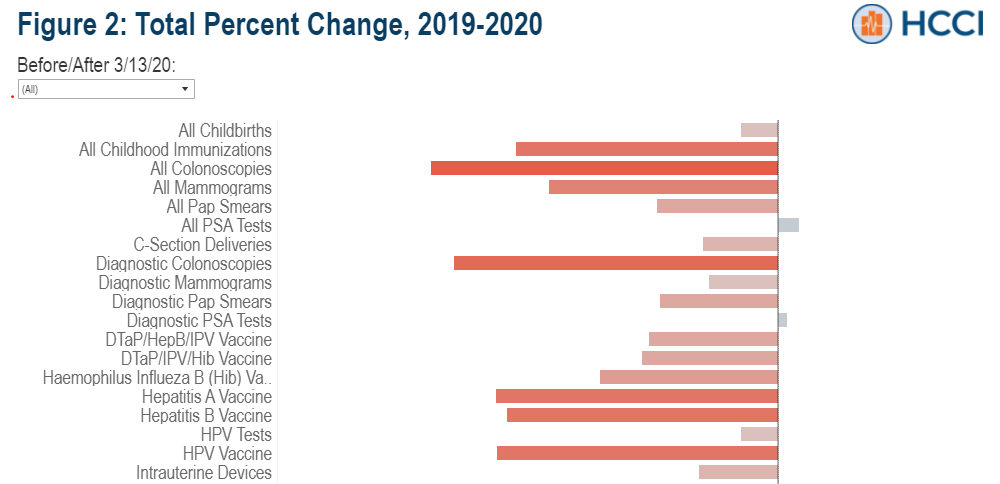 Read more: The Impact of COVID-19 on the Use of Preventive Health Care
Updated 4/16/2021 to include data through 12/30/2020. Since the original post on 9/9/2020, the data have been adjusted to account for claims submission lags. For more information, see Methods Note below. COVID-19 has had an extraordinary impact on the US health care system since its emergence in early 2020. One of the largest and most immediate impacts has…
-
The Insanity of U.S. Health Care Pricing: An Early Look at Hospital Price Transparency Data
 Read more: The Insanity of U.S. Health Care Pricing: An Early Look at Hospital Price Transparency Data
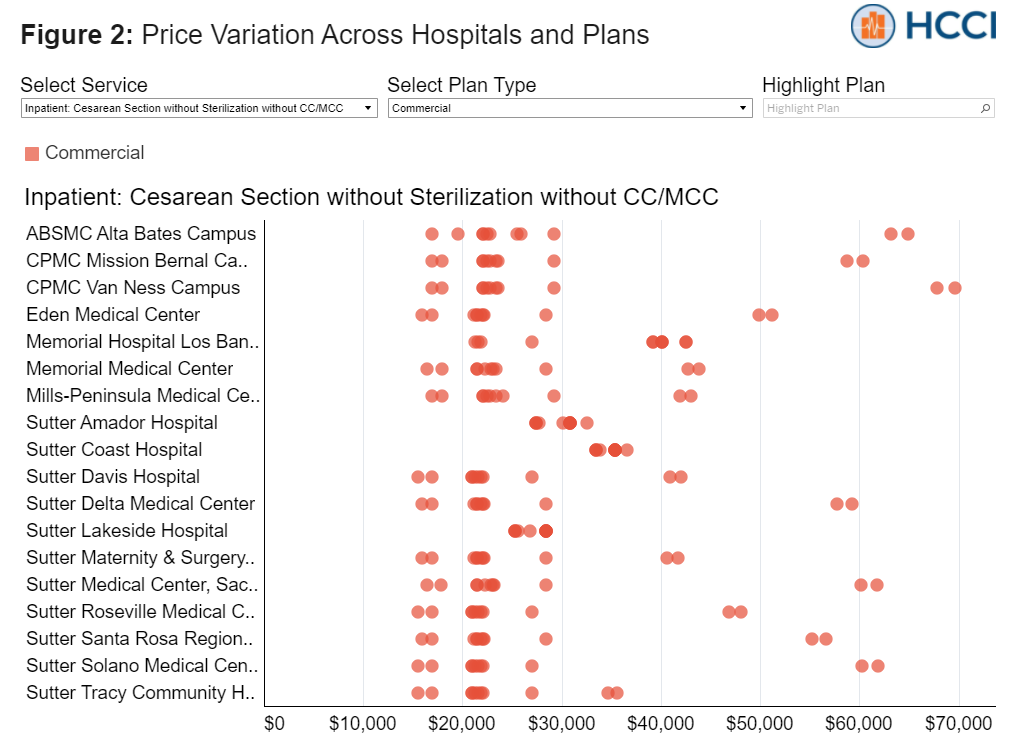
The numbers in this report have been updated to reflect the most recent pricing data made available by Sutter Health. While nearly all of the prices remained unchanged (93%), some, generally higher cost services were revised downward by Sutter. For example, in the initial report we found that C-section prices ranged from $7,634 to $89,244…
-
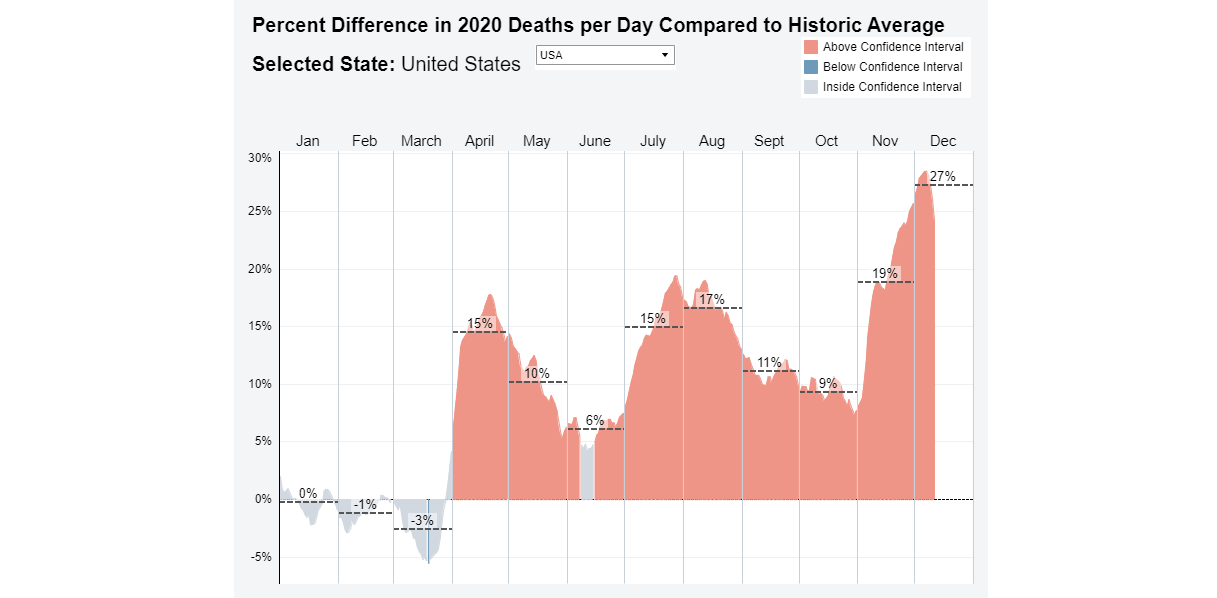
Daily Deaths During Coronavirus Pandemic by State
 Read more: Daily Deaths During Coronavirus Pandemic by State
The staggering death toll of the novel coronavirus pandemic in the United States has been widely reported, surpassing 523,000 as of March 8, 2021. Over the course of the current pandemic a common method for measuring the probable number of deaths caused by COVID-19 has been comparing actual deaths in 2020 to the expected number…
-
Using Medicare Data to Improve Vaccine Targeting: Providers Serving Highest Risk Patients
Tags: COVID-19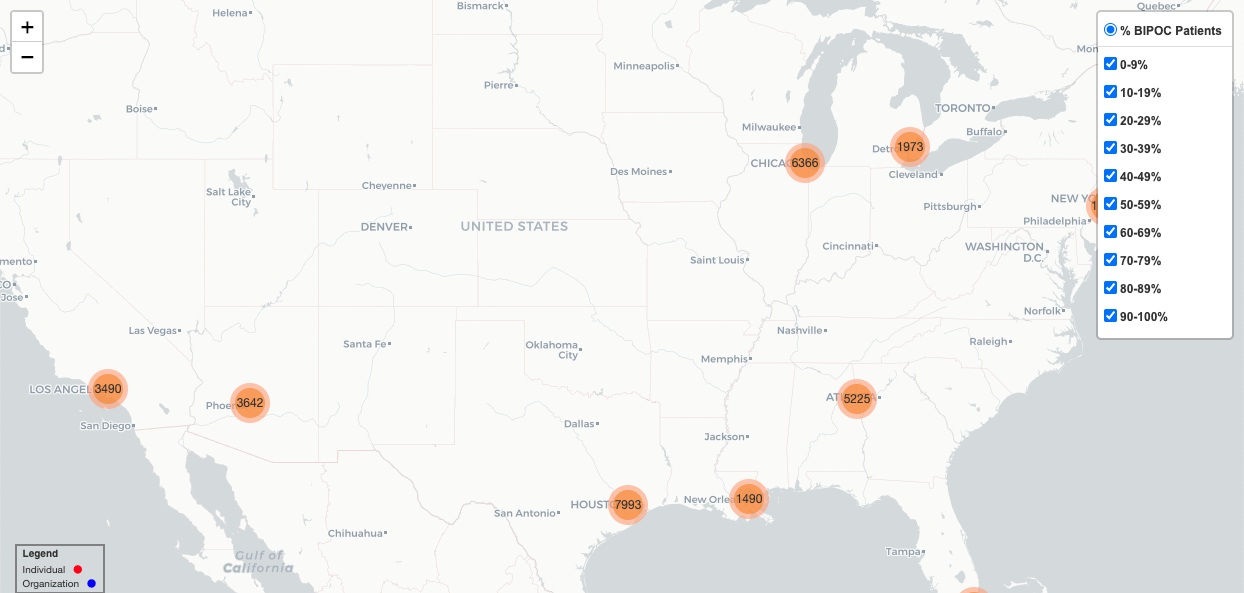 Read more: Using Medicare Data to Improve Vaccine Targeting: Providers Serving Highest Risk Patients
As the production and distribution of SARS-CoV-2 vaccines ramps up in the United States, there is a need to ensure that communities at highest risk for severe COVID-19 morbidity and mortality are targeted. As of February 2021, the Pfizer/BioNTech and Moderna mRNA vaccines, which were approved by the U.S. Food and Drug Administration (FDA) under…
-
COVID-19 Disparities Persist in Community Health Centers’ Vulnerable Populations
Tags: COVID-19 Read more: COVID-19 Disparities Persist in Community Health Centers’ Vulnerable Populations
Community Health Centers (CHCs) serve over 29 million vulnerable patients, making the lack of data on COVID-19-related racial disparities in patients served in CHCs a critical knowledge gap in assessments of the pandemic’s national impact. In rural and poor urban areas, CHCs may be the only accessible healthcare option. Even when other options exist, CHCs…