
Publications
-
Ouch!: New Data reveals ER spending increased by 51% from 2012 – 2019, with patient out of pocket payments increasing by 85%
Tags: Emergency Room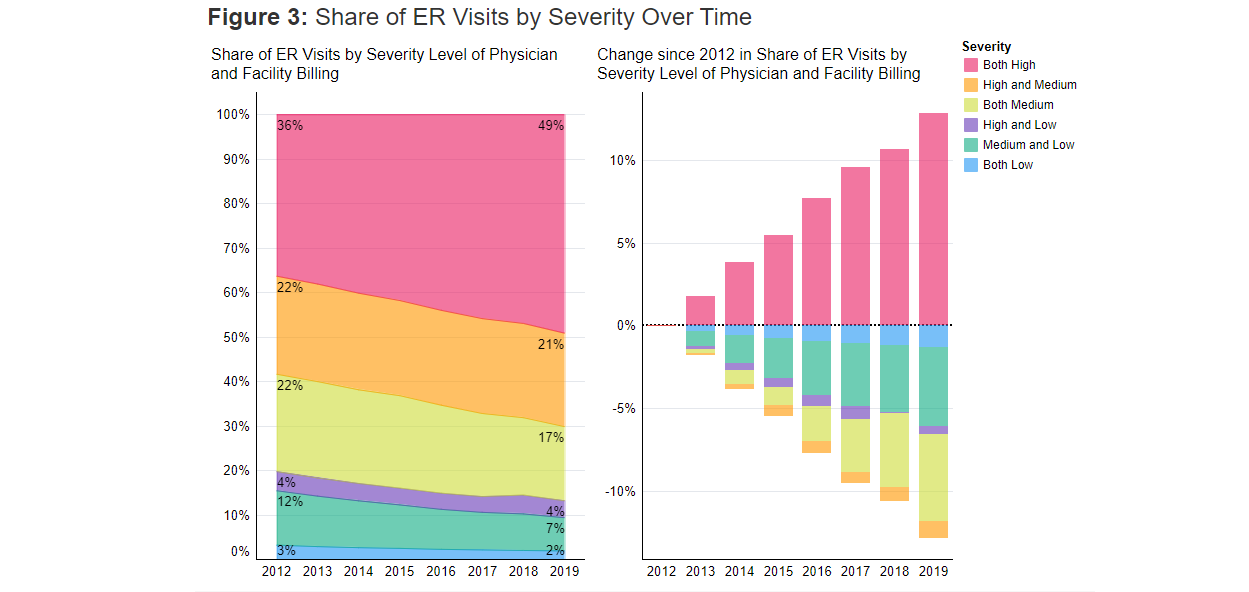 Read more: Ouch!: New Data reveals ER spending increased by 51% from 2012 – 2019, with patient out of pocket payments increasing by 85%
Introduction Excessive emergency room (ER) spending and utilization have long been major areas of focus for health care stakeholders. The ER is an important source of health care for many individuals, especially those who lack a usual source of care, or those with work schedules that limit the ability to access care during “normal business…
-
Capping Out-of-Pocket Spending on Insulin would Lower Costs for a Substantial Proportion of Commercially Insured Individuals
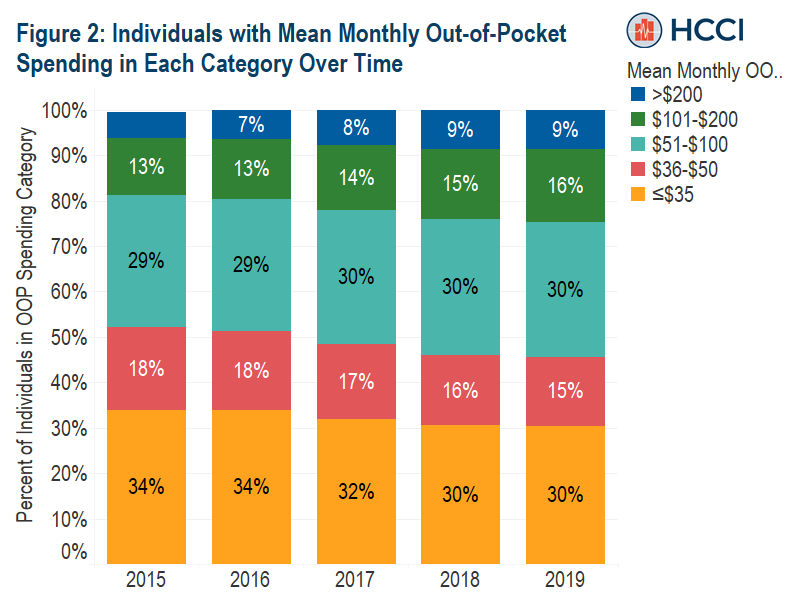 Read more: Capping Out-of-Pocket Spending on Insulin would Lower Costs for a Substantial Proportion of Commercially Insured Individuals
Previous HCCI analysis documented rapid growth in insulin spending over the 2012-17 period. High out-of-pocket spending may deter adherence to insulin among individuals with diabetes, with potentially fatal effects. In this blog, we update our analysis of out-of-pocket insulin spending to 2019 using HCCI’s unique commercial claims dataset, which includes prescription drug claims for 29 million…
-
Health Affairs: Regulating Hospital Prices Based On Market Concentration Is Likely To Leave High-Price Hospitals Unaffected
Tags: Market Concentration Read more: Health Affairs: Regulating Hospital Prices Based On Market Concentration Is Likely To Leave High-Price Hospitals Unaffected
Abstract Concern about high hospital prices for commercially insured patients has motivated several proposals to regulate these prices. Such proposals often limit regulations to highly concentrated hospital markets. Using a large sample of 2017 US commercial insurance claims, we demonstrate that under the market definition commonly used in these proposals, most high-price hospitals are in…
-
JAMA Internal Medicine: Association of Surprise-Billing Legislation with Prices Paid to In-Network and Out-of-Network Anesthesiologists in California, Florida, and New York: An Economic Analysis
Tags: Surprise BillingRead more: JAMA Internal Medicine: Association of Surprise-Billing Legislation with Prices Paid to In-Network and Out-of-Network Anesthesiologists in California, Florida, and New York: An Economic AnalysisQuestion What is the association of state surprise-billing legislation with prices paid to anesthesiologists in hospital outpatient departments and ambulatory surgery centers? Findings This retrospective economic analysis of more than 2.5 million claims filed for patients with private health insurance who received anesthesia services in hospital outpatient departments and ambulatory surgery centers from 2014 to…
-
JAMA: Differences in Cancer Care Expenditures and Utilization for Surgery by Hospital Type Among Patients With Private Insurance
Read more: JAMA: Differences in Cancer Care Expenditures and Utilization for Surgery by Hospital Type Among Patients With Private InsuranceQuestion Are there differences in insurer spending and care utilization for patients with private insurance undergoing cancer surgery at National Cancer Institute (NCI) centers vs community hospitals? Findings In this cross-sectional study of 66 878 patients with breast, colon, or lung cancer, surgery at NCI centers, compared with community hospitals, was associated with higher insurer…
-
Annals of Surgery: Opioid Fills in Children Undergoing Surgery From 2011 to 2014: A Retrospective Analysis of Relationships Among Age, Initial Days Supplied, and Refills
Read more: Annals of Surgery: Opioid Fills in Children Undergoing Surgery From 2011 to 2014: A Retrospective Analysis of Relationships Among Age, Initial Days Supplied, and RefillsAbstract Objective: The primary objective is to describe the relationship between the days supplied of postsurgical filled opioid prescriptions and refills. Background: The American College of Surgeons (ACS) has called for surgeons to alter opioid prescribing to counteract the opioid epidemic while simultaneously providing pain relief. However, there is insufficient evidence to inform perioperative prescribing…
-
AJPM: Robust Prescription Monitoring Programs and Abrupt Discontinuation of Long-term Opioid Use
Read more: AJPM: Robust Prescription Monitoring Programs and Abrupt Discontinuation of Long-term Opioid UseIntroduction This study assesses the associations between the recent implementation of robust features of state Prescription Drug Monitoring Programs and the abrupt discontinuation of long-term opioid therapies. Methods Data were from a national commercial insurance database and included privately insured adults aged 18–64 years and Medicare Advantage enrollees aged ≥65 years who initiated a long-term…
-
AJMC: Commercial and Medicare Advantage Payment for Anesthesiology Services
Read more: AJMC: Commercial and Medicare Advantage Payment for Anesthesiology ServicesABSTRACT Objectives: Anesthesiology services are a focal point of policy making to address surprise medical billing. However, allowed amounts and charges for anesthesiology services have been understudied due to the specialty’s unique conversion factor (CF) unit of payment and complex provider structures involving anesthesiologists and certified registered nurse anesthetists (CRNAs). This study compares payments for…
-
AJMC: Association Between Hospital-Insurer Contract Structure and Hospital Performance
Read more: AJMC: Association Between Hospital-Insurer Contract Structure and Hospital PerformanceABSTRACT Objectives: To describe the association between the form of hospitals’ contracts—either markup from a benchmark or a discount from a list price—and performance: price, charge, cost, and length of stay. Study Design: Retrospective observational study using administrative claims data matched with hospital characteristics from the American Hospital Association Annual Survey and the Healthcare Cost…
-
JAMA Network: Prescription Drug Monitoring Program Mandates and Opioids Dispensed Following Emergency Department Encounters for Patients With Sickle Cell Disease or Cancer With Bone Metastasis
Read more: JAMA Network: Prescription Drug Monitoring Program Mandates and Opioids Dispensed Following Emergency Department Encounters for Patients With Sickle Cell Disease or Cancer With Bone MetastasisAbstract: Patients with sickle cell disease (SCD) or cancer with bone metastasis often present to the emergency department (ED) for treatment of severe pain, and opioid analgesics remain first-line therapies for acute pain in the ED or after discharge. Policies aimed at improving the safety of opioid prescribing, such as state legislative mandates that prescribers register with or…