
External Research
-
INQUIRY The Journal of Health Care Organization, Provision, and Financing: How do the Hospital Prices Paid by Medicare Advantage Plans and Commercial Plans Compare with Medicare Fee-for-Service Prices?
Tags: Commercially Insured, Inpatient Spending, Medicare, Medicare Advantage, Peer Reviewed Journals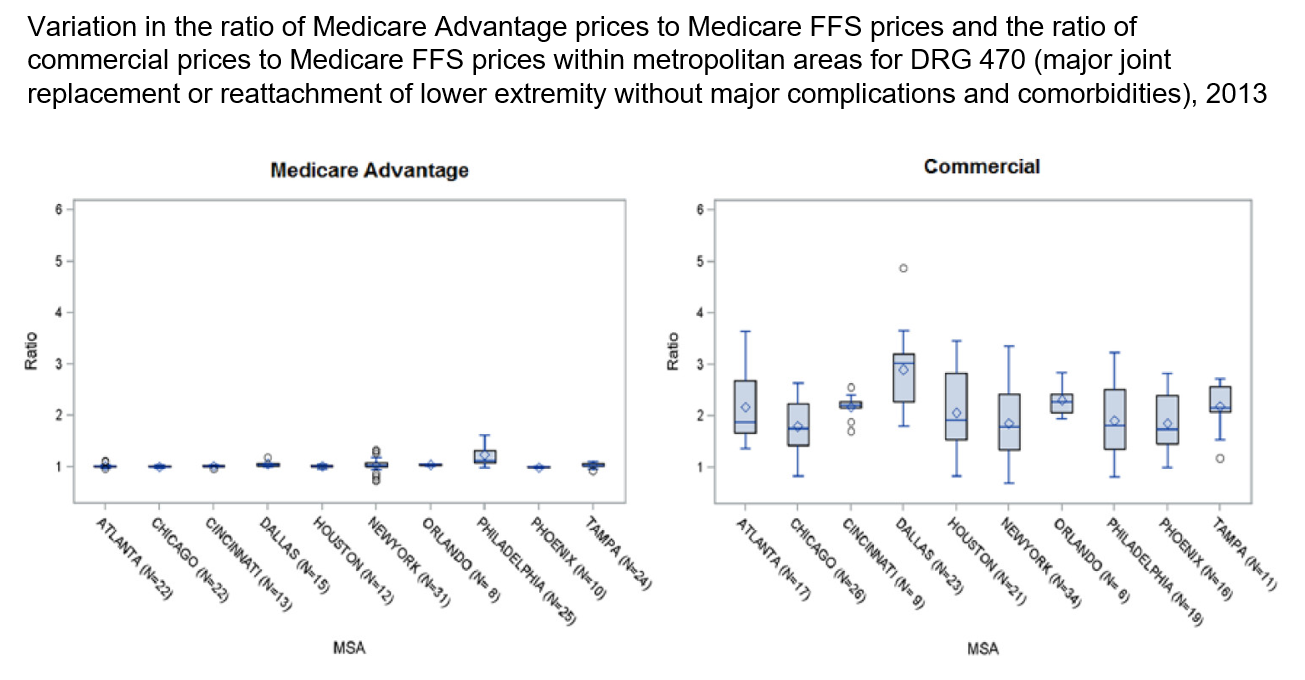 Read more: INQUIRY The Journal of Health Care Organization, Provision, and Financing: How do the Hospital Prices Paid by Medicare Advantage Plans and Commercial Plans Compare with Medicare Fee-for-Service Prices?
ABSTRACT The prices that private insurers pay hospitals have received considerable attention in recent years, but most of that literature has focused on the commercially insured population. Although nearly one-third of Medicare beneficiaries are enrolled in a Medicare Advantage (MA) plan, little is known about the prices paid to hospitals by the private insurers that…
-
Health Services Research: Physical Therapy as the First Point of Care to Treat Low Back Pain: An Instrumental Variables Approach to Estimate Impact on Opioid Prescription, Health Care Utilization, and Costs
Tags: Commercially Insured, Emergency Room, HSR, Opioids, Out-of-Pocket, Peer Reviewed Journals, Utilization Read more: Health Services Research: Physical Therapy as the First Point of Care to Treat Low Back Pain: An Instrumental Variables Approach to Estimate Impact on Opioid Prescription, Health Care Utilization, and Costs
ABSTRACT Objective: To compare differences in opioid prescription, health care utilization, and costs among patients with low back pain (LBP) who saw a physical therapist (PT) at the first point of care, at any time during the episode or not at all. Data Sources: Commercial health insurance claims data, 2009–2013. Study Design: Retrospective analyses using…
-
NBER: The Price Ain’t Right? Hospital Prices and Health Spending on the Privately Insured
Tags: Commercially Insured, Inpatient Spending, Market Concentration, NBER, Outpatient Spending, Peer Reviewed Journals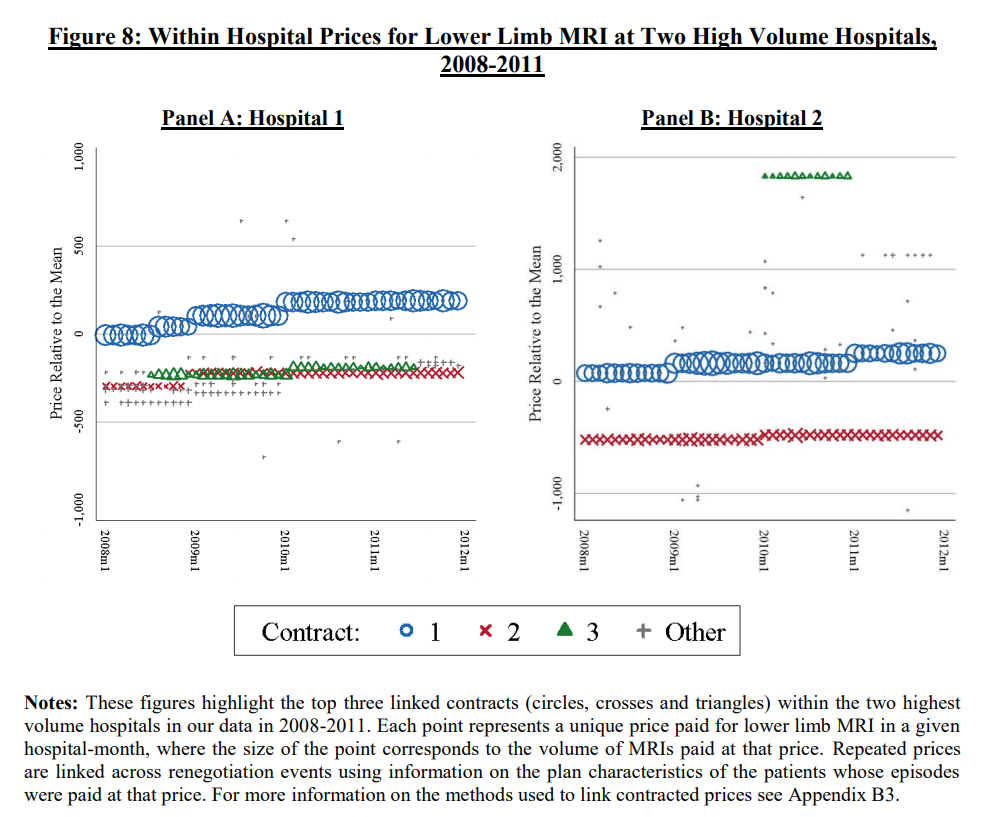 Read more: NBER: The Price Ain’t Right? Hospital Prices and Health Spending on the Privately Insured
ABSTRACT: We use insurance claims data covering 28 percent of individuals with employer-sponsored health insurance in the US to study the variation in health spending on the privately insured, examine the structure of insurer-hospital contracts, and analyze the variation in hospital prices across the nation. Health spending per privately insured beneficiary differs by a factor of…
-
American Journal of Obstetrics & Gynecology: Nationwide trends in the utilization of and payments for hysterectomy in the United States among commercially insured women
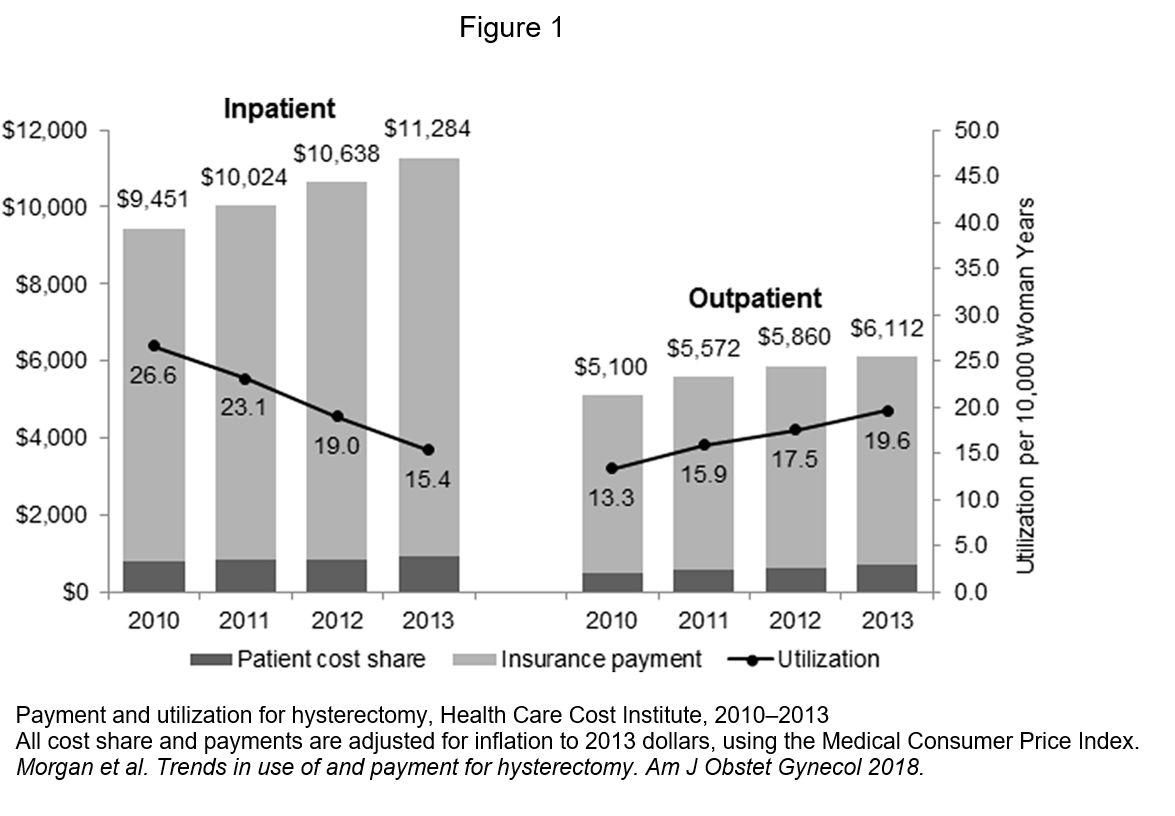 Read more: American Journal of Obstetrics & Gynecology: Nationwide trends in the utilization of and payments for hysterectomy in the United States among commercially insured women
ABSTRACT Background: Laparotomy followed by inpatient hospitalization has traditionally been the most common surgical care for hysterectomy. The financial implications of the increased use of laparoscopy and outpatient hysterectomy are unknown. Objectives: The objective of the study was to quantify the increasing use of laparoscopy and outpatient hysterectomy and to describe the financial implications among…
-
Medical Care: The Differential Effects of Insurance Mandates on Health Care Spending for Children’s Autism Spectrum Disorder
Tags: Autism, Children, Commercially Insured, Inpatient Spending, Medical Care, Outpatient Spending, Peer Reviewed Journals Read more: Medical Care: The Differential Effects of Insurance Mandates on Health Care Spending for Children’s Autism Spectrum Disorder
ABSTRACT Objectives: There is substantial variation in treatment intensity among children with autism spectrum disorder (ASD). This study asks whether policies that target health care utilization for ASD affect children differentially based on this variation. Specifically, we examine the impact of state-level insurance mandates that require commercial insurers to cover certain treatments for ASD for…
-
Obstetrics & Gynecology: Rate of Pelvic Organ Prolapse Surgery Among Privately Insured Women in the United States, 2010-2013
Read more: Obstetrics & Gynecology: Rate of Pelvic Organ Prolapse Surgery Among Privately Insured Women in the United States, 2010-2013Abstract OBJECTIVE: To analyze utilization of, and payments for, pelvic organ prolapse procedures after the 2011 U.S. Food and Drug Administration (FDA) communication regarding transvaginal mesh. METHODS: This is a retrospective cohort study examining private claims from three insurance providers for inpatient and outpatient prolapse procedures from 2010 to 2013 in the Health Care Cost…
-
NBER: Hospital Pricing and Public Payments
Tags: Affordable Care Act, Inpatient Spending, NBER, Peer Reviewed Journals, Readmissions, Value Based CareRead more: NBER: Hospital Pricing and Public PaymentsABSTRACT: A longstanding debate in health economics and health policy concerns how hospitals adjust prices with private insurers following reductions in public funding. A common argument is that hospitals engage in some degree of “cost-shifting,” wherein hospitals increase prices with private insurers in response to a reduction in public payments; however, evidence of significant costshifting is…
-
Health Affairs: Rising Use Of Observation Care Among The Commercially Insured May Lead to Total And Out-Of-Pocket Cost Savings
Tags: Commercially Insured, Health Affairs, Inpatient Spending, Observation Stays, Out-of-Pocket, Peer Reviewed JournalsRead more: Health Affairs: Rising Use Of Observation Care Among The Commercially Insured May Lead to Total And Out-Of-Pocket Cost SavingsABSTRACT: Proponents of hospital-based observation care argue that it has the potential to reduce health care spending and lengths-of-stay, compared to short-stay inpatient hospitalizations. However, critics have raised concerns about the out-of-pocket spending associated with observation care. Recent reports of high out-of-pocket spending among Medicare beneficiaries have received considerable media attention and have prompted direct policy…
-
Health Affairs: Effects Of State Insurance Mandates On Health Care Use And Spending For Autism Spectrum Disorder
 Read more: Health Affairs: Effects Of State Insurance Mandates On Health Care Use And Spending For Autism Spectrum Disorder
ABSTRACT: Forty-six states and the District of Columbia have enacted insurance mandates that require commercial insurers to cover treatment for children with autism spectrum disorder (ASD). This study examined whether implementing autism mandates altered service use or spending among commercially insured children with ASD. We compared children age twenty-one or younger who were eligible for mandates…
-
JAMA Oncology: Association Between Quality of Care for Breast Cancer and Health Insurance Exchange Coverage An Analysis of Use of Radiation Therapy After Breast-Conserving Surgery
Read more: JAMA Oncology: Association Between Quality of Care for Breast Cancer and Health Insurance Exchange Coverage An Analysis of Use of Radiation Therapy After Breast-Conserving SurgeryABSTRACT Research comparing quality of cancer care by insurance categories concluded that cancer patients without insurance or with Medicaid experienced inferior quality of care compared with those with private insurance. A new insurance category created from the Affordable Care Act (ACA) is insurance purchased from the Health Insurance Marketplace (also known as the exchange). The present…